Bipolar disorder and anxiety: One never knows what bipolar disorder will thrown in our direction. I knew that my move to Europe would be exciting, but I also knew it would have its challenges. I didn’t know what symptom would turn up. I of course hoped that no symptoms would arise and I would just get on with my life. Ah, bipolar disorder isn’t kind to me.
This time it’s anxiety.
I have an anxiety disorder along with my bipolar disorder- this means that I have anxiety even when I’m not manic or depressed. My mood in terms of those mood swings is very stable, but I have be dealing with paranoid psychosis and anxiety. It leads to the question- do people who have an anxiety disorder- without bipolar disorder- have paranoia? I’m very interested to explore this topic.
My bipolar disorder is awful. It wants to control my life. But guess what. I am here in England. I am thriving- that is a word I don’t really like, but it does describe how I feel. I wish that my days were about work and life and having fun, right now that is not the case. My current days are about getting my anxiety under control. If you have anxiety, it’s normal. It’s difficult to manage and it sucks, but it’s normal if you have a brain disorder. I listened to two excellent videos for help this morning. I loved them both. I have put them below!
We have bipolar disorder. So what! So freaking what! We can control it and live our dreams. Rock on!
Julie
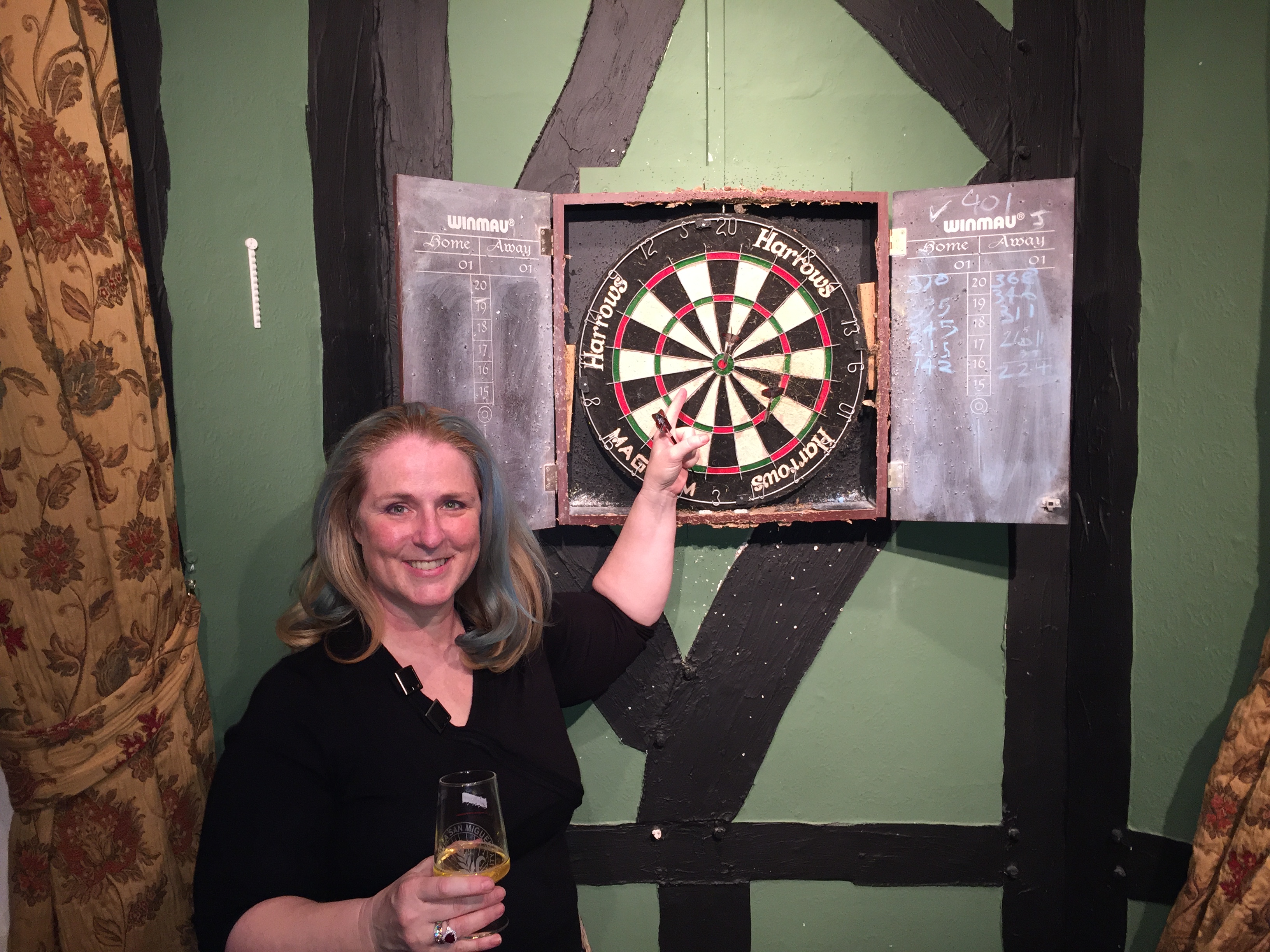
PS: That’s me in the pub across the street. Bullseye!
Bipolar Disorder, Travel and Anxiety. Hello from England. The first stop on my European adventure. I made a video from Cambridge yesterday about bipolar disorder and anxiety. It took me a few hours to deal with the anxiety, but I definitely got through it and had a good experience. We can travel when we have bipolar disorder! Julie
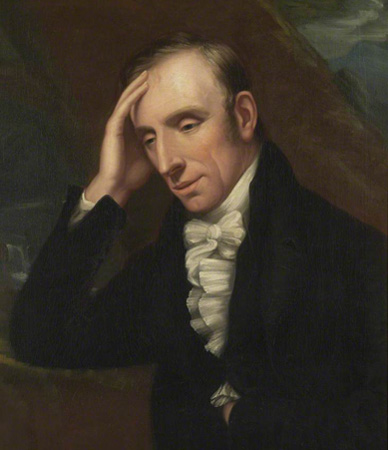
(c) The Wordsworth Trust; Supplied by The Public Catalogue Foundation
Violence and mental illness: There has been another shooting in the United States. This time in Kansas. I no longer even have to wait for police reports to know if the shooter is mentally ill. No one in their right mind gets a gun and kills innocent people- thus, someone who opens fire on innocent people is mentally unwell in my mind. I notice that Obama, whom I support fully in many areas has given $1 billion dollars to cancer research. It’s the same old story- cancer gets the funds and the mentally ill keep killing and dying. It’s estimated that 500,000 a year die from cancer. It’s estimated that around 50,000 die from suicide. We know those numbers are low- many people with mental illness die and it goes un-reported. I’d like to see a study that shows the % of money that goes to cancer vs. the amount that goes to mental illness research and prevention. If anyone has this answer, please post it below.
If we want to stop the extreme violence problem in the US regarding shooters of innocent people, we need to fund mental health research. As seen by the knifing in China and the sword killing of innocent people in Sweden, both by killers with a history of mental illness- guns are NOT THE PROBLEM. They make it easier and I fully support a measure that makes it hard for people with mental health disorders to get guns, but people who are sick will find a stick if nothing else is available. (No need to argue with me about this- I have a mental illness and I fully support the need for extra care to help us when we are not in our right minds- such as when I am manic and psychotic. I will respect your opinion on this and please feel free to state it below, but let’s stay civil and change the world and not fight with each other.)
Of course cancer needs funding, but it seems to be at the expense of mental health every time.
When I feel overwhelmed by all of this, I’m reminded that we are an advanced society going through a regression all over the world involving violence and human intolerance. We have been here before. Here is a poem ….. from the year 1802. Humans are what we are- we can change, but we seem to start at a baseline of needing to change the minute we are born into today’s world. What can I do to help the world? What can you do to help the world? What can we do as a team to help the world? My answer is simply: fund mental health care and end the preposterous mental health system with its HIPPA rules and out of date psychiatrists and treatment centers and move forward with FUNDING and care that works. If we can do this with great success with cancer, we can do it with mental illness.
Please share your opinion. Write as much as you like. Let’s talk about this. Let’s share our ideas.
Never doubt that a small group of thoughtful, committed citizens can change the world; indeed, it’s the only thing that ever has. Margaret Mead
And now the poem. I’d love to know what you think of this poem and how it reflects our world today.
Julie
The World Is Too Much With Us
BY WILLIAM WORDSWORTH
The world is too much with us; late and soon,
Getting and spending, we lay waste our powers;—
Little we see in Nature that is ours;
We have given our hearts away, a sordid boon!
This Sea that bares her bosom to the moon;
The winds that will be howling at all hours,
And are up-gathered now like sleeping flowers;
For this, for everything, we are out of tune;
It moves us not. Great God! I’d rather be
A Pagan suckled in a creed outworn;
So might I, standing on this pleasant lea,
Have glimpses that would make me less forlorn;
Have sight of Proteus rising from the sea;
Or hear old Triton blow his wreathèd horn.
***
PS: No matter what, I am an optimist. I believe that as a group- those of use with bipolar disorder can educate and change the world. Join me!
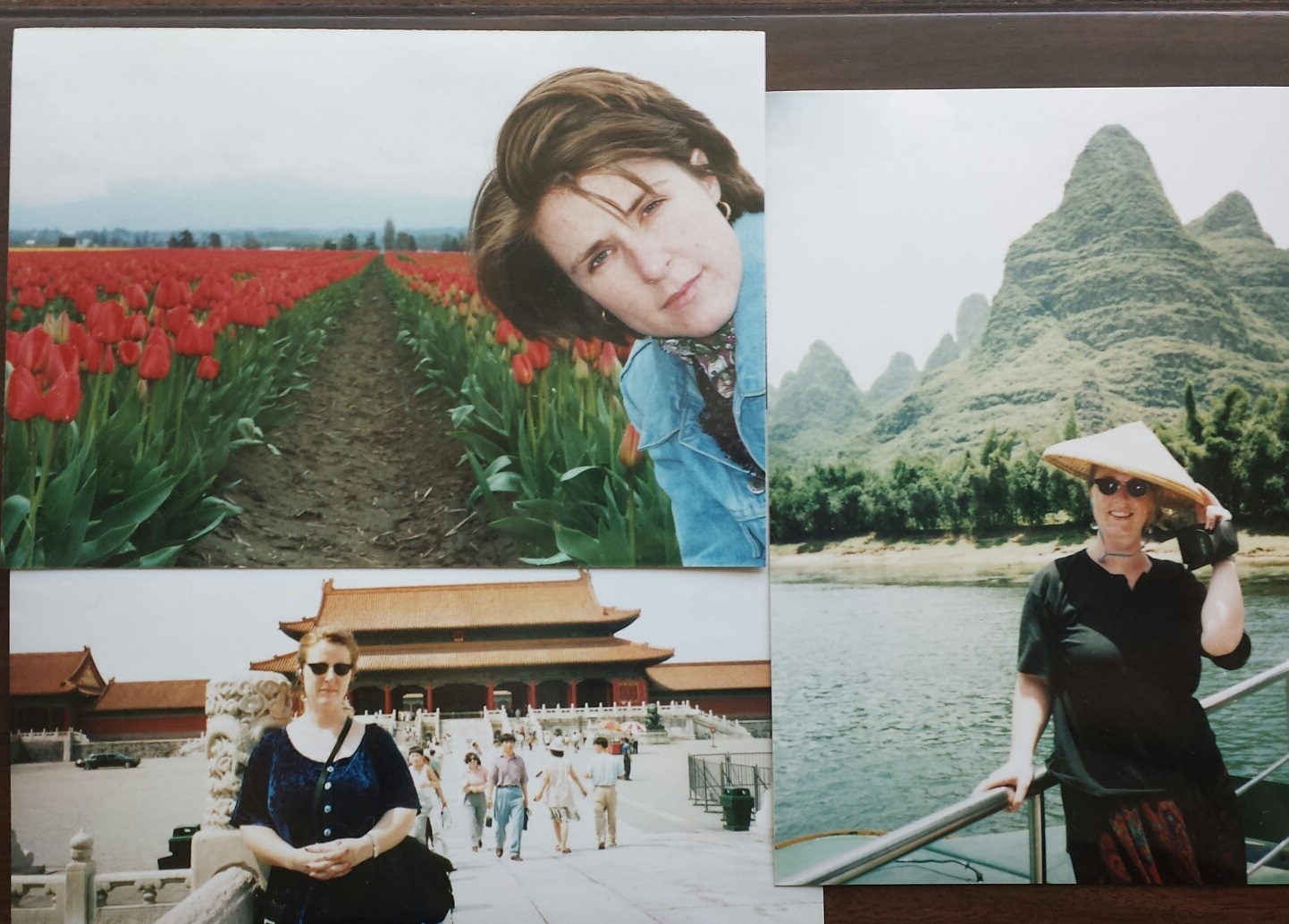
One of my future book projects covers the topic of how to travel safely and stably when you have bipolar disorder. This book has been in the draft process for quite awhile, but the topic is so timely I thought…… Julie, just get the tips out there. People need them! Here’s the introduction to the book. The pictures are from Japan and China in the 90’s. I used to just pick up and go anywhere! Who knew what mood would follow? I move to Europe in two months. I’ll share my process on this blog and on my Julie A. Fast Facebook page. I’m prepping for the time change now- and am working hard to stay stable. We CAN travel successfully when we have bipolar disorder. It just takes a plan.
Bipolar Disorder on the Road: Four Steps to Successful and Stable Travel
An Introduction
The smoother the travel, the more stable the mood.
For most of my life I traveled two to three times a year. Between 1982 and 1995, I visited Europe many times, lived in Japan for three years, traveled all over Asia, went to school in China and frequently went between my home in Seattle and my mother’s home in Hawaii. All of this travel involved time changes that inevitably led to mood swings. I had NO idea why my moods would change so much when I traveled.
When I was finally diagnosed with bipolar disorder in 1995 at age 31, I had to modify my travel lust in order to get the illness more under control. I only traveled to Hawaii for quite a few years after my diagnosis and worked diligently on using my Health Cards to keep myself stable.
I moved to France for six months in 2002 with my then partner Ivan (who is French )and finally moved to my home in Portland, Oregon and have been here ever since. I always assumed I would continue to travel the world throughout my life. But the reality is that travel is tough for me. To be blunt, travel makes my bipolar disorder a lot worse.
Since starting my management system, I’ve paid daily attention to the triggers of bipolar disorder. And one of the strongest triggers for many people with this illness is traveling. I’m now happy to announce that I can once again travel all over the world, but it takes a lot more planning than in the past in order to make sure the trip is successful and stable. This book explains the four steps I use every time I travel. Bipolar disorder management takes a lot of practice, but it is possible to find what works and get your life to a place where traveling is fun!
A few ideas to ponder. I’d love to hear your views as well.
1. Restlessness. This can be mental or physical. It’s a definite symptom of mania, but I also think it’s a personality trait of many of us with this illness. We simply crave change and can have trouble saying no to something new, even though it’s not good for us!
2. Bipolar disorder is a sleep disorder. All people with bipolar disorder have sleep problems. The more we learn about the genetics of the circadian rhythm, the closer we get to a bipolar disorder cure. I believe this!
3. Bipolar disorder is a lifestyle illness– this means that our lifestyle choices affect our moods. Changes in lifestyle can be as powerful as medications.
4. Much of what we know is still in the chicken or the egg stage. For example, does lack of sleep cause mania or do we have sleep problems because the mania is already there? It’s fascinating.
What parts of bipolar disorder do you find interesting? Julie
The post below is from many years ago- it’s important to look back and see how far we have come. I was depressed off and on for 30 years. I went through intense, suicidal downswings that could last for months and sometimes years at a time. I never thought I would see the day where bipolar depression didn’t rule my life.
Depression no longer rules my life. I’m rarely depressed and when I am, I have tools to deal with it. It’s still scary and intense and I hate it- just as you probably hate your own depression, but I want to let everyone know that no matter how long a person has been depressed, life can change. I read over the post below and thought to myself- how did I survive this? How did I live with this almost every day and not just give up? The answer is in my books- I created a treatment plan and used it even when I believed it would never work. Then it worked. I want the same for you or a loved one. Let’s make 2016 the most stable year of your life. If you care about someone with bipolar disorder, you can learn to help them find stability. I don’t want us to live like I used to live- here is the post. Isn’t it great that I got better. It means you can get better too. Julie
My post from the past:
I woke up depressed- nothing new unfortunately. I knew it was going to be a tough morning- but it doesn’t have to be a tough day!
My feet felt like they were tied to concrete bricks. It would be so much easier to just stay in bed- or so my mind wanted me to believe. That’s a lie of course- I reminded myself that there is NEVER an occasion where staying in bed while depressed is a good decision. Beds are for sleeping. I said this to myself, “Beds are for sleeping Julie. You don’t stay in bed when you’re depressed.”
Putting on my shoes helped me move forward- making myself get dressed kept me moving out the door.
It’s hard to get going when your first thought in the morning is that there is no purpose to your life. I have to remind myself that I didn’t feel this at all yesterday and that this is depression talking. Now I have to get out and work on my book proposal- see friends and get going! I will not listen to this depression. It’s an illness and it’s not real.
Julie
***
I’m so thankful this depression is no longer in my life ever day. I want the same for you.
Parent, Caregiver, Partner or Health Care Professional?
Enter your email below and sign up for Julie’s The Stable Lifestyle newsletter.
Mom Brain Podcast
Listen to Julie’s latest interview on bipolar disorder and mental health in children, teens and adults on the Mom Brain Podcast with Hilaria Baldwin and Daphne Oz.
The health information contained herein is provided for general education purposes only. This site should not be seen as a substitute for an official diagnosis or for professional health care.
 Bipolar disorder and anxiety: One never knows what bipolar disorder will thrown in our direction. I knew that my move to Europe would be exciting, but I also knew it would have its challenges. I didn’t know what symptom would turn up. I of course hoped that no symptoms would arise and I would just get on with my life. Ah, bipolar disorder isn’t kind to me.
 A few ideas to ponder. I’d love to hear your views as well.