Growing Older with Bipolar Disorder

IMG_3790

Growing Older with Bipolar Disorder. Hmmm.

I started writing on this topic ten years ago. I’m now 52 and believe me, learning to age gracefully as a woman who has bipolar disorder is a challenge. I will meet this challenge, but it’s taking a lot of fortitude. My pictures on my websites have to be changed. I no longer look like I did 10 years ago. That is life. I want to embrace life instead of fighting to look like I’m 30 again. Bipolar disorder has been with me since age 17. That‘s my age in the picture below. I was diagnosed at 31. No one teaches us how to age with this illness, so I take on the challenge to do it myself and help others of my age do it as well. I remember being a teen with this illness. I remember being in my 30s and 40s. It was different. Now at 52 I can still empathize with all people who have bipolar disorder, but my needs are changing and my management plan has to change with them. Welcome to reality! 

I wish I had been diagnosed earlier. I encourage teens with a bipolar disorder diagnosis to see it as freedom. The diagnosis absolutely ensures a better future. I lived through my young life having little control over my behavior. I prefer life with the diagnosis.

Here’s to aging gracefully!

Julie

Reading the News and Looking for Symptoms of Bipolar Disorder Mania

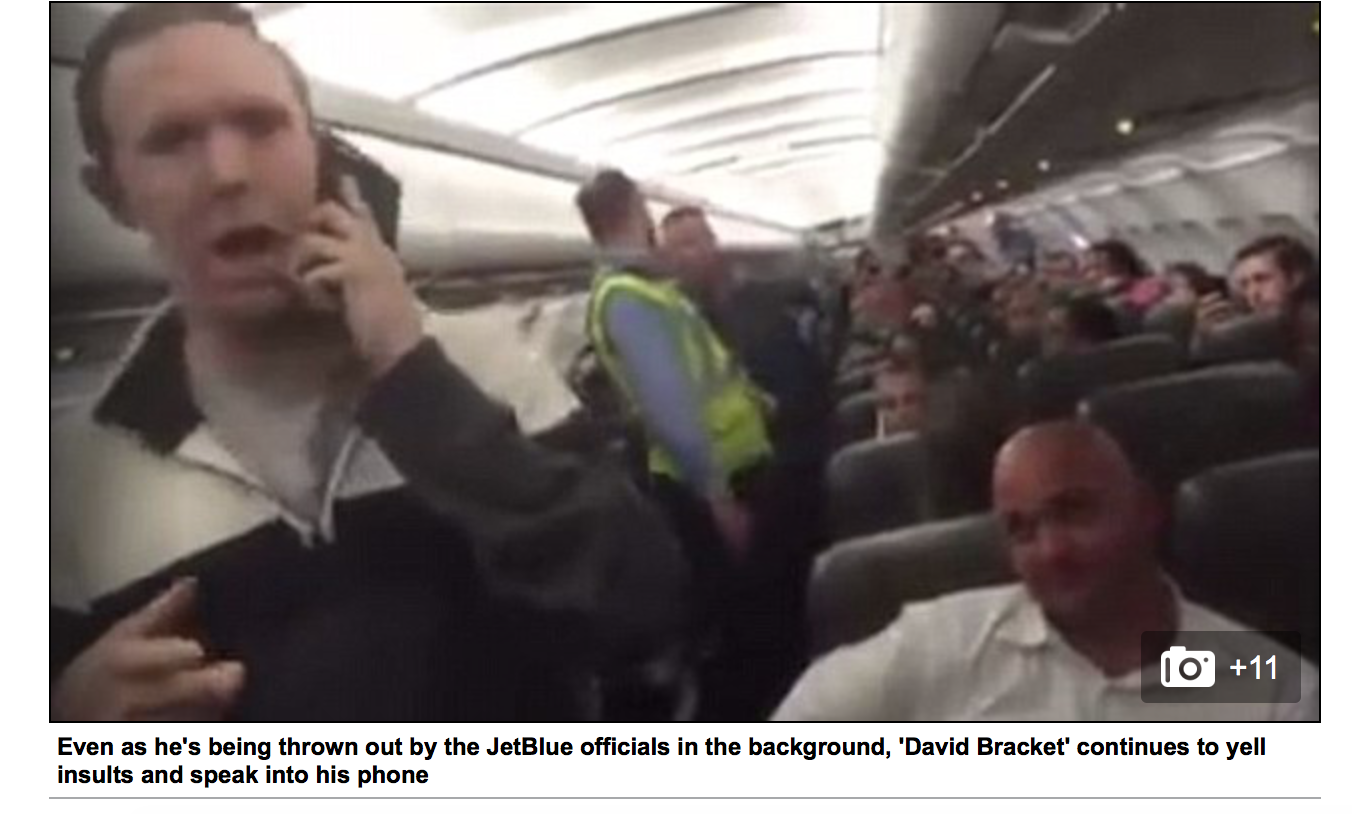
Screen Shot 2016-04-13 at 9.32.25 AMLooking for mania in the news. I’m often interviewed when people with mental health symptoms find themselves in the public eye. Reading news stories and looking for the underlying mental health possibilities of someone’s behavior also helps me hone my intuition for working with coaching clients who aren’t sure what is happening with a loved one. I will give you an example. Read the following article and let me know your thoughts on the situation. I will then tell you mine.

Click here to read the article Pictured: The California real estate ‘millionaire’ who was thrown off a flight after bragging about ‘owning six houses’ and ‘having an IQ of 176’ while he was drunk. 

I mean this seriously and am not mocking this man. I feel that we often look at behavior and attribute it to drinking and ‘arrogance,’ when the behavior could very well be mania. I’m lucky there were no camera phones around before I was diagnosed. One article called him the World’s Biggest Douchebag. Hmm. Misogynistic and thoughtless. I don’t know about you, but I’m a right jackass when I’m manic.

If you’re a loved one of a person with bipolar disorder, how often have you seen this kind of behavior when someone is manic?

Julie

I also have to add a comment about travel- we often get sick when we travel. As you may know, I just moved to Europe and can tell you that the stress of airports alone can make us have mood swings!

Bipolar Disorder Medications and Weight Gain: Prader-Willi Syndrome

Screen Shot 2016-04-11 at 9.03.11 AMWeight gain from bipolar disorder medications, especially anti psychotics represents one of the most difficult challenges those of us with bipolar disorder face when we try to manage this illness. I gained 80 pounds my first three years on meds. In the past few years, I gained 35 due to troubles with lithium.

It’s an awful experience to ALWAYS be hungry and NEVER fill full. It’s frustrating and rather scary to see your stomach turn to mush and your once healthy body get bigger and bigger….but it’s also fascinating. I am always on the lookout for why the drugs are doing this to so many of us, while some people can take lithium for example with ZERO weight gain.

There are stories in the news that might give us some answers. The story linked below talks about Prader-Willi syndrome.  Is it possible that the drugs that often save lives, are creating a similar problems in our bodies?

The more we can understand why something is happening, the better we can make decisions that help us stay stable and healthy.

I use lithium only in emergencies because of the weight gain for myself. I wish I could take it regularly, as it works well for me.

Some of my friends have been on lithium for over 20 years with great success and no health problems. It’s an individual issue. There is a lot of talk about metabolic syndrome and bipolar disorder medications. It’s time to do something about the weight gain from medications. So many of us need meds, but we need our physical health as well.

I have other meds I can take without weight gain. Interesting. What do you think?

Julie


Click on the picture above or click here to read the article on Prader-Willi syndrome and insatiable appetites. Could there be a link to this type of disorder that big pharma needs to address? 


PS: A friend once said to me, “Julie, you successfully manage one of the most dangerous illnesses in the world- you write books on the topic and yet you can’t get a handle on your eating.” She wasn’t being cruel. She simply pointed out what I have known all of my adult life. I find it EASIER to manage bipolar disorder than my own eating disorder.

Guest Blogger Tara Rolstad: Parenting Children with Mental Health Disorders. It Gets Better!

(Note from Julie: Tara and Dave’s book, No Really, We Want You to Laugh: Mental Illness and Stand Up Comedy Transforming Lives was just nominated for an independent book award.)

Unique, alone, and never-ending.

When I started my journey seven years ago walking alongside family members who lived with mental illness, I was pretty sure those words would always define my experience.

My husband and I had become foster parents for two nieces, and I became legal guardian of a third, and we helped my parents as they took in a fourth. It wasn’t long before the severity of the girls’ PTSD, Borderline Personality Disorder, depression and anxiety became clear.

We who had known nothing, really, about mental illness would eventually become skilled advocates, experts in DBT, CBT, and OHCHWGA. (That last one? “Oh, holy crap here we go again,” familiar to many an overwhelmed family member.)

But at first, as we were swept up in a chaotic storm of self-harm, suicide attempts, ER visits, and psych unit admissions, we felt like No One Anywhere in the History of Ever could possibly know our fear, our exhaustion, or our desperation to help our loved ones. Or just get one worry-free night’s sleep.

Now I know differently .

After seven years of sharing my story, first hesitantly in conversation and then through stand-up comedy, I’ve found that like all experiences of the human condition, ours aren’t unique.

We aren’t alone. Now I know there are thousands of family members who have walked this road, known our fear, inhabited our exhaustion. I’ve talked to them in churches, in conferences, at schools and after comedy shows. They come up to me and say,

“How did you know? Who told you? That was MY story, MY experience, MY terror.”

Now I know, after walking alongside my fierce girls as they have fought for recovery, for stability, for a voice in their treatment and a voice in their lives, I know differently.

Never-ending? Nah. Mental illness is a lifelong experience for many, but it CAN get better. Recovery IS possible. So are meaningful relationships, new experiences, and fulfilling lives. I’ve learned that from my nieces, from the stand up comics I’ve trained, and from all who’ve rushed to share their story with me when they find out they AREN’T unique, or alone, and it won’t always be this way.

It gets better, and sometimes, you’ll laugh. I promise.

Tara

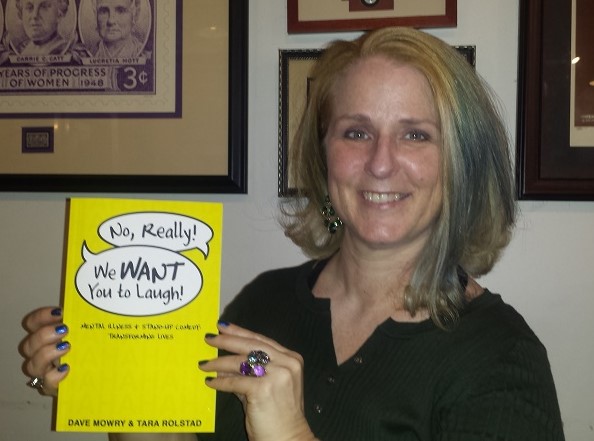
Tara Rolstad, along with the amazing Dave Mowry is co-author of the book, No, Really, We WANT You to Laugh: Mental Illness and Stand Up Comedy Transforming Lives that tells the stories of six comedians whose lives and experiences with mental illness were changed through learning stand-up comedy.

Click here to read more about Tara and Dave’s book on amazon. 
Julie no really 2015

It was so exciting to hold the book in my hands. I’ve been the MC for Dave and Tara’s stand up comedy routines.  Laughing about our experiences with mental health disorders is life changing. If you’re a parent of a child with bipolar disorder and are looking for a tool to help your child get back into the world- I believe that No Really, We Want You to Laugh can transform lives! 

Julie

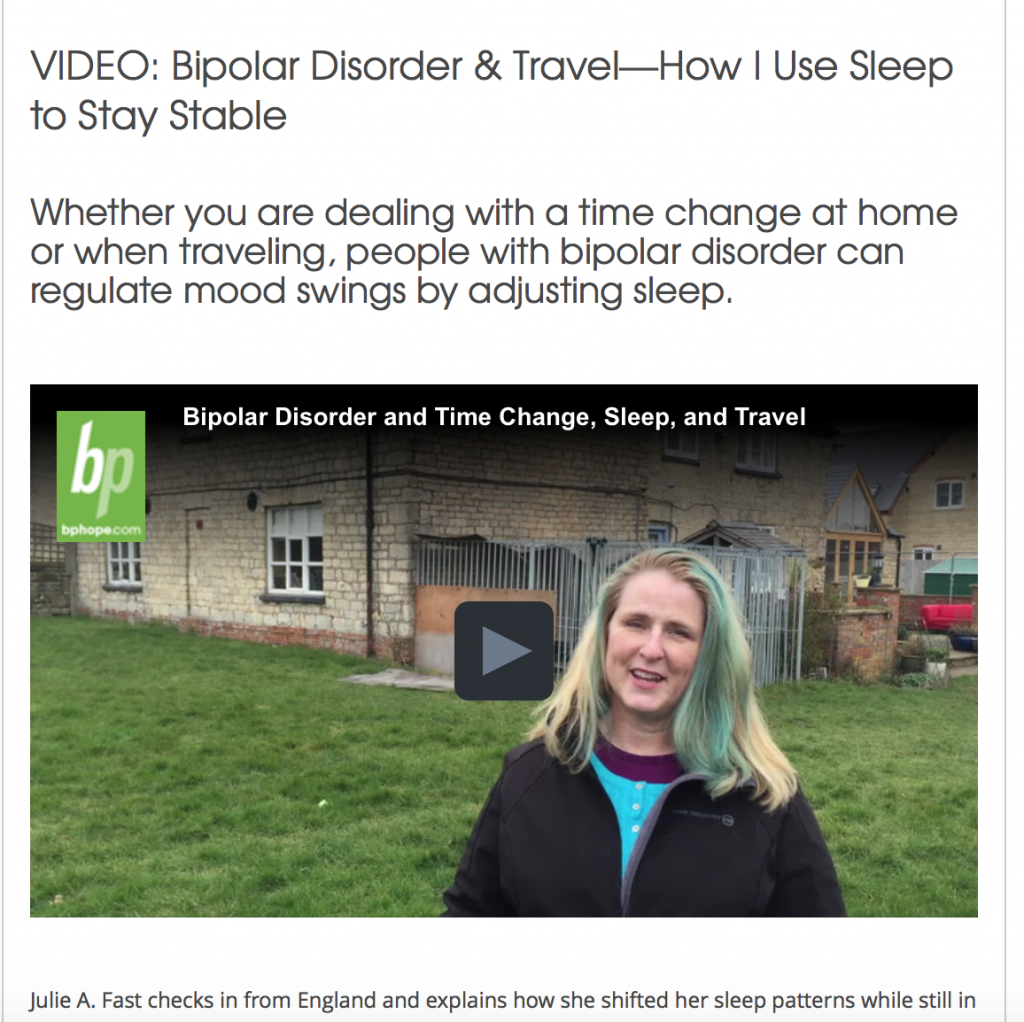
BP Magazine VIDEO: Bipolar Disorder & Travel—How I Use Sleep to Stay Stable

Screen Shot 2016-04-01 at 1.51.55 PM

Julie A. Fast checks in from England and explains how she shifted her sleep patterns while still in the United States in order to be on an England schedule before arriving on a new continent. Whether you’re traveling close to home or around the world, regulating sleep is the number one way to keep the mood swings to a minimum in order to enjoy the most benefit from any form of travel. Julie created a plan to change her circadian rhythm slowly in order to keep her bipolar disorder under control once she was in a new country. It’s not always possible to make as big a change as Julie describes, but even a shift of one hour can make a difference. People with bipolar disorder can travel and see the world!

Click here to watch the video on Bipolar Disorder and Travel- How I Use Sleep to Stay Stable from Bp Magazine. 

Lamictal (lamotrigine) for Bipolar Disorder: Reader Question

med questionHello Julie,

I was taking 800 mg a day of lomictal. I dropped to 600 for six. Then two weeks ago, I dropped to 400. The dose is still way above “normal”. I just don’t think I need these meds. I totally get and appreciate mental illness. I have been on meds for 28 years. I am a high functioning professional — 12 months ago my life took a huge turn — for the better. I retired and several other external circumstances changed. I want to quit all meds and try it on my own — again, I am not anti meds in any way, nor am I feeling above them. I just wonder if meds have always been the first answer for me and adjusting, increasing and changing them for 28 years has gotten me where I am.

Am I way off for feeling this way? Any constructive input would be greatly appreciated.


The side effects of tapering down have not been pleasant, but have not been unbearable. I would like to just take the leap and cold turkey the last 400 mg — again input appreciated. 

Tammy

**********

Hello Tammy,

I was on 700 mg of Lamictal for years. It really helped. Then I didn’t need it any more. Bipolar disorder changes. If you are able to manage this illness through lifestyle changes, this means you can change the way you use medications as well. The biggest issue for all of us is preventing mania. Depression has a big treatment window, mania can catch us in hours. I suggest the Health Cards if you want to manage this illness on your own- with meds ready for triggered mood swings. I don’t say this to everyone, but if you have a plan in place for the mania, you can try a different way to stay stable. This means a lot of people around you looking for symptoms. You can ready about the Health Cards on my books page- these are what I use every single day- especially since my recent move to Europe. Wow, talk about triggers! The Health Cards keep me safe and stable.

I suggest talking with your health care professional when going off Lamictal- there can be huge side effects from going down on the drug including twitching, teeth grinding, breathing problems and other brain/body related side effects.  I’m glad you’re getting through this ok. Think of how long it took to build up in your body- it can take this long to get off it. Also, there is no specific dose for Lamictal for bipolar disorder- 200mg is considered therapeutic and works for many people. I needed the much higher dose and then my depression was under control and I no longer use Lamictal. I would go back on it if needed. I call it the wonder drug. It’s especially effective for angry depression. It’s NOT a mania drug.  There are way too many health care professionals who don’t understand this concept.

When you use a treatment plan to manage all of your symptoms and prevent triggers, you can take much less medication. I’m excited for you, but truly suggest you have your symptoms lists ready to see if any show up as you go down. You might find you need a lower dose of the medications. Lamictal is an epilepsy drug and is used in higher doses quite regularly, but it can also help greatly at very low doses.

I don’t like medications, but I’ve needed them to stay alive. My goal is a strong plan with limited medications. We can all do this. Even people with bipolar disorder one can lower medications with a good plan. Some of us need meds for life, but why not take them in the smallest dose possible. Good luck!

Julie