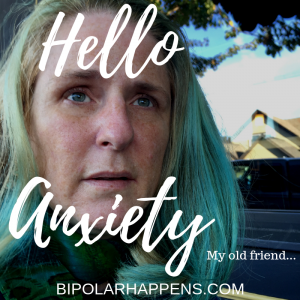
When did having a mental health disorder become an excuse for being mean? I used to be a right blue meanie before I was diagnosed. I’ve shared this story before, but I’m sharing it again for those of you who are new to my work.
When I was in college (my 4th college and my 8th year!), I had a friend I really liked named Gwen. We were both tutors for the University of Washington football team. It was an amazing job with a lot of interesting encounters and many perks.
But I had undiagnosed bipolar and didn’t know why I was always so unhappy. I complained about everything and looking back, I can’t believe I kept as many friends as I did. One night, Gwen and I were walking up a long set of stairs to attend an interesting event that a lot of people wanted to go to and we were a few of those on the guest list. I was complaining and complaining about who knows what, but I do remember saying, “Wow, there are a lot of stairs, “ or something like that and she stopped, right on those stairs and looked at me and said, “No more! I can’t take it any more! I can’t take one more negative comment from you! I am done! I am done! Nothing is good enough! Nothing!” I was crushed because she was right. I was so negative. I hated it about myself. Everyone hated it. I had no idea where it came from as I was often a lot of fun which is why I had so many friends in the first place.
I was raised in a very negative environment. This was pointed out to me many times by therapists, but I still had so much trouble controlling my negativity during certain times.
My diagnosis answered many questions, but no one really taught me how to handle myself in social situations. I would be cheerful and fun (euphoric mania) and then mean and nasty (negative depression.)
I fight my negative thoughts to this day. My question for myself and for you is What are we going to do about negativity so that we don’t take it out on others?
Here is what I do- and believe me, it’s always a work in progress.
I’m careful on social media. I often write opinion pieces that others find upsetting. When someone says I’m being mean or unkind, I listen and I examine what I have written. I learn. What I ask is that we think of how we show our displeasure with others online. When I write a comment, I start with the positive and then voice my more negative feelings in a way that shows it is simply an opinion and not an attack.
I ask others for advice. The people around me must let me know if I’m being too negative. I can’t always hear it in myself. This is especially true in a romantic relationship. People who love us romantically will handle our negativity a lot longer than the general public, but eventually people will snap, just as Gwen did on the stairs.
Bipolar mood swings make me mean and nasty. Depression makes me see the dirt of the world. Dysphoric mania not only makes me negative, but it fills me with the attacking desire to actually harm others with my words.
This world is not here to please me. I am here to interact in the world and hopefully leave a positive mark with my work. It is a struggle. This bipolar is strong. I have a list of my very unappealing symptoms that I memorized a long time ago. When they show up now, I fight them. I write them in my journal. I do a blog post. What I don’t want to do is take them out on others. I have bipolar and it can make me mean, but this is not an excuse for bad behavior.
Bipolar disorder is about mania and depression mood swings. Within these mood swings, we can have a variety of symptoms including anxiety, attention and focus problems, irritation/anger and more. If you’re depressed and anxious, you’re normal. If you’re in a dysphoric manic episode and are anxious, you’re normal.
Panic attacks are a form of anxiety. A panic attack involves the overall body and mind sensation that there is danger around you and the reaction is one of breathing problems, chest heaviness, fear, the sense that something is wrong and the idea that you can’t go on or function.
Panic attacks are NEVER real. Let me clarify this- they are always about the brain and the body and illness. They are a part of the brain reaction called anxiety. There is no real threat. There is no real problem. If you are actually in danger and have a reaction, this is not anxiety.
What is Anxiety if You are Not Manic or Depressed?
If you have bipolar disorder and have panic attacks when you are NOT manic or depressed, this is a separate anxiety issue. It’s not a part of bipolar. Bipolar symptoms only exist within depression and mania.
I’ve always had anxiety with my bipolar, but everything changed in 2012 when I had a head injury from a biking accident. My regular anxiety- that was always present with my depression turned into a separate and very serious anxiety disorder that included severe panic attacks. I’d experienced a few in the past, but nothing like the daily breathing problems and anxiety I experienced after the accident. Because of this, I had to modify the bipolar disorder management plan I talk about in all of my bipolar and depression books and learn to mange this new and to be honest, REALLY AWFUL anxiety problem.
Help with Panic Attack Symptoms
I was in a panic attack when I started this blog. Writing about anxiety is one way I calm myself down so that I can go back to the work that was adding to my anxiety. I have 12 short articles due for a website. I am excited about the project and LOVE the topic: The Bipolar Disorder Dirty Dozen…twelve substances that can can bipolar disorder mood swings. But every time I sit down to write, the panic shows up. It’s all encompassing. I can’t breath. I have trouble thinking. I worry I will never get the project down. I feel guilt and upset with myself. I feel that the editor will think I’m weak and unprofessional. These are all symptoms of my anxiety panic attacks. I can give in to them and not work or I can learn to work through them, around them and with them.
Here is what I do to manage my panic attacks to get the work done:
Accept that I will not be able to work on a tight deadline. I may have to spread things out in order to manage the anxiety. I HATE this, but it’s my reality. I can fight the reality or work with the brain I have. This means I have to work with websites, publishing companies and editors who understand my work ability.
I breathe. A lot. I focus on breathing. Here is a video that helps me every time.
I’m nice to myself. I love the book The Four Agreements. I started following the ideas of Don Miguel Ruiz over 20 years ago and they have saved me in so many ways. The fourth agreement is DO YOUR BEST. I am doing my best. When I have a panic attack, I must treat anxiety first. There isn’t another path. I can’t write more. I can’t buckle down and meet those deadlines darn it! Nope. I have to stop and treat the anxiety.
I write. Hopefully you can find a process that works for you. For myself, it’s helping others who are going through the same anxiety as I experience. This calms me down. Writing about anxiety reminds me that it’s my brain and not a personal weakness.
I want you to have a good life. I want to have a good life. To do this, we must manage our brains in the same way we manage everything else in life. If you have anxiety, get help. Use the Anxiety Health Card or the system in Take Charge of Bipolar Disorder to write down what you think, say and do when anxious and then come up with a plan to counter the anxiety when it shows up.
It’s common for people with bipolar one to get psychotic during full blown mania or a depression. Those of us with bipolar two usually experience psychosis during depression, but we can also get psychotic during dysphoric mania. If you are unfamiliar with these terms, this blog has a search feature you can use for more information. I also write a lot about bipolar disorder in general on the Bp Magazine for Bipolar Website.
The following article from the Health Central website answers the questions, What is Psychosis? What are Hallucinations and Delusions, Can Cannabis Cause Psychosis and more.
I really enjoy writing about this topic. It’s underserved in our bipolar community. I have bipolar disorder and a psychotic disorder. My official diagnosis is schizoaffective disorder. My psychosis started at age 16. I hope you enjoy the article. There is no need to be scared about these words: psychosis, schizo, psychotic. They simply mean that a person has psychosis. A person like myself!
Here is the first section of the article:
What is Psychosis?
“You’re psychotic!” Many people use the words psychotic and psychosis to describe a person’s behavior and yet few understand the very real and quite common symptoms of psychotic experiences and disorders. Psychosis is a break with reality that results from changes in brain chemistry created through illness, substance reactions, or sleep deprivation. The main symptoms of psychosis are hallucinations and delusions.
What is the difference between #bipolar#depression and sadness and grief? This is an important distinction as it is one reason that therapy rarely works for bipolar disorder or #schizoaffective disorder unless the therapist is trained in symptom management. ( I love training therapists on bipolar as they can be such an important part of our treatment.)
Sadness and grief are natural human emotions that are attached to a noticeable event. My beloved kitty died last week. I felt and still feel deep sadness and grief. It comes and goes and is directly attached to the loss of my beautiful kitty Bibi. I can pinpoint when and where it started and why. It is not confusing. It is painful, but understandable.
My sadness and grief do not spill over into the rest of my life. For example, I don’t think, my kitty died and now my family members are going to die as well. Life is misery and pain.
That is NOT sadness and grief. That is the language of depression.
Depression takes over the whole person. It takes over all of our thinking. It takes over our behaviors. In can be triggered by an event or come into our lives without one trigger.
This is an enormous difference and a distinction that all health care professionals must make.
Depression is not sadness and grief. Sadness and grief have a timeline. They ease with time. They do not morph into another problem. Watch how stable people deal with sadness and grief. They are normal. I am not normal. I have bipolar depression and it is not about sadness and grief. It is an illness I must treat and manage daily or it will kill me.
When Bibi died, I felt the depression monster climbing up my back. It whispered in my ears that life would always be painful. It talked to me and told me to get in bed and put the covers over my head in order to mourn her. It lied and lied like it always does.
I recognized depression as I have it well listed on my Health Cards.
Before I learned to manage this monster, I was depressed for years and years and years. Every minute was a struggle. I thought of suicide daily. It was not the real me. It was illness.
I want to be ready for the triggers that cause depression. I want to be ready for what life hands me. This means I have to treat bipolar first.
I started my plan in 1998. That is 20 years ago. It took a long time to see results. But I can see them now. My companion died. The grief and sadness were overwhelming at first. I cried as much as I have cried in my life. I felt the pain of loss. And it is getting easier by the day to accept the loss and get on with my life. That is a normal response to loss.
Depression is insidious. It is a as dangerous as any flesh eating bacteria. When the depression tried to take over, I used my plan and said no.
My beloved kitty Bibi is gone. I wrote about her cancer diagnosis a few weeks ago. I was ready for her death and want to share with you what I’m doing in order to keep myself stable while going through rather intense grief.
First, thank you for the messages of support. I do a lot of writing on Facebook about my personal life and people have been wonderful. This post is about what I do to keep bipolar under control when I face a big trigger.
Do you have a pet you love? Many of us find such comfort in our wonderful animal companions.
This next question is harder: As a person with bipolar or any mental health disorder, do you have a plan in place for real loss- in other words, are you ready for the death of a beloved pet? Especially if this animal helps with your symptoms? I used to call Bibi my depression companion. What a lovely soul in a beautiful body!
Now she is a soul.
Death of a pet is a bipolar disorder trigger. We need a plan in place for when loss happens. It can be sudden or it can be drawn out as it was with Bibi. We need a plan now that we put into place when the news that a pet is ill or a sudden death happens.
When I heard Bibi had cancer, I had to think of many things outside of my grief. It has been sadly wonderful experience saying goodbye to her. My mom as always was a steadfast companion. I honored Bibi every day that she had left. We all did.
The hardest part of this by far is not knowing how her death might affect my bipolar.
On the day she died, I could not sleep. I found I wanted to write about her in my journal and remember her and cry. All natural behaviors. What was not natural was the fact it was past midnight. At 1 AM, I realized it could be dangerous for my bipolar as I could easily not sleep at all.
I decided I could love her and think of her the next day. I forced myself to sleep.
I took extra sleep meds and got 8 hours. It wasn’t easy, but I did it. I use the goofy SleepwithMe podcast and it helped greatly.
Please think ahead….
What is your plan if your kitty gets sick? What is your plan if your best friend who happens to be a dog, simply gets older as all animals do and his time is near?
I want us to learn how to prepare for triggers so that when they arrive, we know what to do.
Here is a short list of what I did to make Bibi’s death as gentle as possible for my brain.
1. When I realized that my sleep would be affected, I asked my mom to help with her care taking. We were a team in this until the end. I could not stay up at night with Bibi. The guilt was enormous at first, but everyone helped. It also helped that she had a very compassionate vet.
2. I imagined life without her. I thought of what I might feel and opened myself to what might show up in terms of bipolar. Yes, I did this before she died.
3. I had sleep medicines ready and used them. This meant sleeping in for two more hours than usual the day she died. It would be hard to do this if I were at a work place, but I have my own business, so it is possible. If you need this and do work with set hours, take sick time.
4. I decided to fully feel everything, but gave myself a time limit for grief. If I don’t do this, it will spiral into depression. This means I can cry naturally, but I will not let myself cry for five hours straight for example. When the panic attacks showed up, I felt them, did my breathing, talked to myself and worked through them. It’s so much easier to do this when you plan ahead.
5. I told my friends that Bibi was dying and asked for help.
I want to learn from this experience so that when another pet or someone I love dies, I will know what works. I am not doing anything to push down my feelings or have less grief. That is normal.
But I am doing everything I can not to get sick. Depression is knocking on the door. I will not let depression in this hotel!
What is your plan? If it is very painful to think about this, I see that as a positive. It means you will need to plan ahead or the grief might be too much if something happens. Join me on my Julie A. Fast Facebook page for this post and let me know what you need. Ask questions. Let’s all have a plan ready for when a beloved pet leaves our lives.
This leaves us room to remember and celebrate all of the love they brought into the world!
Julie
PS: I saw this gorgeous kitty statue when I was at the British Museum. Yes, it is green and it has earrings.
2019 update: An update. I thought long and hard about getting a new kitten once Bibi died. I was in so much grief due to losing her that I didn’t want to make a quick decision. After the grief lessened, I was able to think more clearly and I now have a kitten named Sadie. She is NOTHING like Bibi. It has been an interesting experience being with such a different spirit. She helped ease my pain. If you are in the process of losing a pet or have lost a pet, please know that is absolutely gets better, but it takes conscious work. We have to want to get better. We have to let go. I let go of Bibi’s spirit consciously. I let her go. I missed her so much and still do. She was my companion. She will never be replaced, but she is free now and I am so thankful she was in my life! Julie A. Fast
We can talk with kids about brain health in the same way we talk to them about their little bodies. “The brain creates thoughts and sometimes these thoughts are confusing.”
All brains are capable of suicidal thoughts. It’s part of the human condition. We can stop the increase in suicide by talking with very young children about the brain.
I wrote an article for my Psychology Today blog on the topic called.
3 Strategies to Talk With Kids About Suicidal Thoughts
Here is an excerpt and then the link to the article:
by Julie A. Fast
A few months ago after a intense reaction to a sleep medication, I had the persistent idea I should jump out of my window.
The idea came to me in a wave of images, thoughts and feelings all at once. As though I were watching a movie, I saw myself jump out of the window. I then heard a voice say, “You should jump out of your window.” And finally, I had the intense feeling that everything really would be a lot better if I jumped out of my window.
Luckily, as a person originally diagnosed with bipolar disorder and later a schizoaffective diagnosis, I have over 30 years of living with suicidal thoughts and recognized that I was sick and got help. It was a terrible and scary experience, but I have a mental illness and know it’s simply the way my brain works.
Imagine what it’s like for a child to go through such a suicidal episode where they hear, see and feel the same sensations as adults and yet there is zero life experience to help them through the episode. Just as I taught myself to manage suicidal thoughts, adults can teach very young children to do the same. The goal is shining a light on the symptoms, explaining that they are a normal part of a misfiring brain and then having a plan in place to help the child find stability. We can do all of this while keeping a child safe and nurtured.
Here are the three strategies…
Click here to read the rest of the article on the Psychology Today website. Very young children do have suicidal thoughts. You can use The Health Cards to help with these symptoms and teach a child that suicidal thoughts are normal and we can learn to manage and prevent suicidal thoughts.
Parent, Caregiver, Partner or Health Care Professional?
Enter your email below and sign up for Julie’s The Stable Lifestyle newsletter.
Mom Brain Podcast
Listen to Julie’s latest interview on bipolar disorder and mental health in children, teens and adults on the Mom Brain Podcast with Hilaria Baldwin and Daphne Oz.
The health information contained herein is provided for general education purposes only. This site should not be seen as a substitute for an official diagnosis or for professional health care.