Bipolar Euphoric Mania is the Greatest Feeling in the World, but I’m kicking it out the door forever….

OMG, I love euphoric bipolar mania so much. It is so comforting. I’ve been manic off and on for almost 40 years. I wish I could stay manic forever. I understand this mania and know how to use it to my advantage. I know how to manipulate this mania. I know how to get any man, any job and any book deal I want with this mania. So why on earth would I stop the mania?
 
Here is the reality of mania when it isn’t stopped the minute I realize it’s here.
 
1. Pregnancy due to sex in a bathroom at a party with a stranger.
2. STDs. Herpes.
3. People who actually know me, hate it. I’m aggressive, loud, impatient, impetuous, forceful, unkind, aggressive and egotistical when I feel this GREAT. My friend Karen says, “I can always tell when you’re manic because you’re really annoying.”
4. I don’t sleep. This confuses the physical body and leads to more physical illness.
5. I make promises I can’t keep.
6. I am unkind and if in a relationship, I will leave because you know, the grass is greener!
7. I don’t give a flying FCUK about anyone but myself even though I appear cheerful and the life of the party.
8. It always, without exception turns into dysphoric mania and then depression.
 
I could make a list as long as a football field.
 
Almost ten years ago now, I said no to all forms of mania. Even the mania that makes me feel like a GOD.
 
What about you? Are you ready to see mania as illness? Are you ready to finally say yes to stability?

Julie

I’m in Starbucks. I know I’m hypomanic. In front of me is a man wearing a soccer uniform. It’s obvious he has just come off the pitch and is getting some after-game refreshment. I look at the back of his head and my eyes roam down his body. When I reach the back of his legs, I have the thought,

“I’m going to get down on my hands and knees and lick his calves.”

I’m serious about not letting mania in my life. Here is an article from my Psychology Today blog called Bipolar, Hypersexual and Celibate. 
 

Loving Someone With Bipolar

Originally posted by Bp Magazine

Loving Someone With Bipolar

A mood episode can cause your loved one to say and do horrible things, but it’s not personal; it’s a medical condition.

by Julie A. Fast 

Years ago, my much-loved partner, Ivan, went into a massive manic and psychotic episode that lasted for almost five months. As his sole caretaker, I was very confused and scared. During his manic and psychotic episode Ivan slept with someone else, told me he didn’t love me and wanted a divorce, had the idea that someone was stalking me, and eventually came very close to suicide. Believe me, I’ve been through it all. And we survived. Your relationship can survive as well.

Bipolar disorder is a medical condition that manifests in behaviors that look like personal choices. It’s hard for partners to understand this as the symptoms feel so personal. When a person with bipolar spends a child’s college fund, makes horrible accusations, cuts down all of the trees in the back yard, refuses to listen to reason, and comes close to destroying a relationship, it’s hard to step back and think, This is an illness, but it needs to happen.

I eventually understood that bipolar made Ivan say and do horrible things while he was sick. At the time, I didn’t have this insight and was just as confused as any partner. I vividly remember looking into his eyes in the hospital and saying, “Ivan? Where are you? Are you in there? What is wrong? Have I done something to deserve this? Are you trying to punish me?” I was scared he would never return back to his sweet and wonderful self—but he did.

I’ve been through it all. And we survived. Your relationship can survive as well.

Bipolar disorder is a medical condition. If you’re worn out because the behavior is constant and the episodes are frequent, this turns into a relationship issue because your needs are not being met. But if there was one huge episode where everything went to hell but the person is back now, this is a medical issue that needs to be treated as one.

It’s often hard for partners who have been on the outside looking in on a big episode to articulate what they need, especially if the emphasis is on getting the person with bipolar stable. I can tell you from being on both sides that the person with bipolar needs to know the partner sees bipolar as an illness that changes behavior. And the partner needs to know that the person with bipolar is going to get help. Here is a script partners can use as a foundation to talk with someone who has bipolar:

I’m confused and hurting right now. We each had a different experience when you were sick. I know you don’t remember some of the really terrible things that happened, but I remember them all. I want you to know that I’m working on understanding how an illness can change a person’s behavior so drastically and how I’m supposed to move on knowing that this might happen again. I don’t blame you for what happened. And even though it’s hard to say this now while we are still working on getting you better and figuring out how this happened, I can move forward. I need time to process what I went through. We don’t have to make big decisions now. I need you to get help with the bipolar so that you can get stable and we can talk about the future when both of us are in a good place. I don’t want to punish you and I don’t want to make decisions I’ll regret. You need time to heal, and I ask that my needs are addressed as well. We can do this together.

Can the relationship be repaired? Of course it can, but it can’t go on the same as before. The biggest mistake couples make is ignoring the bipolar, assuming medications are the answer, and thinking life can return to how it used to be. There now has to be an awareness of the illness and how if left unmanaged it can cause chaos in a relationship, over and over again. Couples who work together to manage bipolar can form a bond that is stronger than a typical relationship simply because many of the issues that people often avoid—including arguing, children, substance abuse, and lifestyle choices—have to be out in the open. Yes, a relationship with someone who has bipolar disorder can succeed. But only if you work together at both the relationship and the bipolar.

Julie 

If you are a partner of a person with bipolar disorder, I highly recommend Bp Magazine and my book, Loving Someone with Bipolar Disorder. I also have a private group for partners on Facebook called The Stable Bed.


Three Myths About Bipolar Mania

Originally publishing by Bp Magazine.

Here are three myths about mania every person affected by bipolar disorder should explore.

By Julie A. Fast

 

Is there anything in mental health more misunderstood than mania? Many people see it as a supercharged, creative time where those of us with bipolar disorder write books, fall in love and live the wild life. HA! Here are three myths about mania every person affected by bipolar disorder should explore.

The words in italics are directly from my journal on days I have been manic in the past.

Myth #1 Euphoric Mania is Fun

No it’s not. We might think we’re having fun while in a euphoric manic episode, but it’s a chemically induced high that has nothing to do with actual happiness. Ask anyone who has been hospitalized for euphoric mania how much fun they had when the mania went too far. Talk with the partners of hypersexual spouses who got manic and gave a loved one herpes. No one wants to talk about this ‘fun’ side of euphoric mania.

Today I talked non stop at Robin’s (my therapist.) We discussed that I was manic when I sat down, but I’m still so embarrassed. I recorded the call as I always do, but don’t ever want to hear it. I had machine gun mouth. That is my word for pressured speech. I’m compelled to talk. It’s as though I am delivering very important information. I’m not. It’s just me rambling. I’m selfcentered and have to hear the sound of my own voice. Everything feels so important. My stories go on and on without consideration for the listener. I wear others out. I make decisions with no thought of how they will play out in the future. I start projects with zero idea of how I will finish what I start. This isn’t fun. This isn’t real creativity. I can’t take care of myself in this state. I have to separate myself form this mania.

Euphoric mania makes me want to hug children I don’t know, lick the calves of soccer players, tell my ideas to a world that really doesn’t need to hear my latest life changing product and sleep with strangers I met at a bar.

I now force myself to see that euphoric mania, even when it feels fun is actually embarrassing and toxic. Teaching myself and the people around me that this behavior is as destructive and as dangerous as suicidal depression was the turning point in my getting better.

Reality #1 Euphoric Mania is Embarrassing, Life Altering and Dangerous

A general note: There are two levels of mania: hypomania and full blown mania. There are two types of mania: euphoric and dysphoric.


Myth #2 Euphoric Mania is Better than Dysphoric Mania

I want the world to learn more about dysphoric mania. Also called mixed mania, dysphoric
mania is usually irritated, aggressive and physically uncomfortable. I see it far more than I used to and believe this rise comes from the incorrect use of antidepressants, supplements, steroids and party drugs that adversely affect the brains of people with bipolar disorder.

There is a woman behind me as I sit outside at my favorite restaurant who has a laugh like a machine gun. She opens her mouth wide and a laugh right up there with Woody f()*$)#*ing Woodpecker comes flying out. I want to shut her up by any means possible. Someone needs to go over there and tell her to shut the @#$& up. One more laugh and I’m going to be the person to do it. I pay my taxes. I pay for this food I’m eating. I’m not going to sit here and let that b@#c$ with a laugh like a dock worker on crack ruin my f@^$#%+ evening.

Dysphoric mania is mean and very active. I’m a writer and I still couldn’t make up a paragraph like the one above! When I’m in a dysphoric manic episode, I change more than with any other episode.

Let’s contrast this with a euphoric entry:

My god I’m happy. I can’t believe how well everything is going since I moved here. We all went to karaoke the other night and I had to pinch myself everything was so perfect!!!!! I am loving life these days. The writing is going smoothly, friends are good and I met a new guy I’m seeing tonight. rEv ReV REVVVV! I can be happy damn it. That depression is not going to get me. YES!

Both of these paragraphs scream illness to me now. Not just the dysphoric vitriol, but the
euphoric lack of reality as well. Euphoric mania is not better than dysphoric mania just because we feel better while euphoric.

There is no good mania.

It’s a myth. I used to say, “I get manic, but I’m lucky, I get the good kind!” This is a person who married a man she knew for two weeks, got drunk every single night during the summer before this marriage happened and eventually caught herpes due to her years of euphoric manic escapades.

I know, letting idea of good mania (euphoric) and bad mania (dysphoric) is hard. But… this is how I changed my life and found more stability. I let go of the idea that it was ok to have euphoric mania. The whole idea of, “At least I get things done!” caused a lot of damage. Now, when I feel euphoric, I move into treatment mode in exactly the same way as I do when dysphoric.

Reality #2 Euphoric Mania and Dysphoric Mania are Equally Dangerous

A general note: People with bipolar two have hypomania that can be euphoric or dysphoric. People with bipolar one have hypomania and full blown mania that can be euphoric or dysphoric. Studies show that 70% of people with full blown mania experience psychosis at the same time. Ye gads!


Myth #3 Mania Goes Away on Its Own

How long mania lasts depends on two things:
A) The natural brain chemistry of the person who is manic ….

and

B) The outside triggers than prolong mania.

Please note that I’m talking about non medicated mania.

A1) Many people let mania run its course. They either love it so much they consciously decide to let it roll or there is such a lack of insight a mania tornado happening in their own home goes unnoticed. ( Example: “You are the one with the problem. Not me!” ETC. )

Mania can last off and on for years. My past hypomanias lasted three or more months and each time my entire world turned upside down due to my manic choices. They always involved men.

We can learn how long our manias last naturally, but wow, it’s often a ticking time bomb if we just let them play out without trying to get better.

B1) Mania also leads people to binge on the triggers that prolong mania. Triggers such as drinking, drugs, unprotected sex, travel, lack of sleep, change in routine, quitting a job, taking on a new job, making huge, non thought out decisions, stopping medications, getting married, leaving a partner, getting in a fight, going to jail, etc., etc. (How did I live through this for so many years!)

How did I find this racing brain and self obsession fun? How did I give into it for all of those years? I’m thinking of creative things but can’t really execute. I’m embarrassed at the speediness of my life. I’m embarrassed to be manic. I look like a bag lady sitting here with my New York Times ripped apart so that I can show the articles to my mom. I used to like this mania! It churns in me like I have been implanted with a generator engine in my chest- and my body runs on super juice. Just look at that sentence. The word choice and word order of mania is shocking. Yes, it’s creative, but creativity without focus. It’s creativity with narcissism- creativity without censor is overwhelming. I want out of this. Where is my lithium. ARG.

If a person is manic and decides not to accept treatment for whatever reason, they will continue with triggering behaviors (that are symptoms at the beginning) and make the mania worse. This is why full blown mania rarely goes away very quickly on its own. We self perpetuate our own mania through our manic behaviors! Triggers=symptoms=triggers= you get the idea.

It’s a myth that letting mania run its course is safe. Prevention and medications are the treatment for mania. Sorry. I wish I had a better answer. My last mania started after a recent trip to Europe.

I felt it quickly and forced myself to avoid triggers and to take my mania meds. Heck no, I didn’t want to do this. And yes, it was hard to make this decision, but I have a Treat Bipolar First plan in place that takes priority in my life. Period.

Reality #3 Mania Often Needs Medications and Always Needs Trigger Management

A general note: Mania and depression are symptoms. One is not different from the other. Both signal illness in my book.

It’s extremely unfair that people with bipolar disorder have to take medications when they feel TOO good. That sucks. It’s not cool that coming out of a depression and going into a euphoric mania isn’t a good thing when it feels so incredible. It’s natural we want to end uncomfortable dysphoric episodes, but cling to the euphoric mania especially after a depression. I want to change how we look at mania. To explode the myth that depression is bad and mania is good. To help us find true stability that is defined by life without depression or mania.

I have a radical question to propose:

I ask this of the people who love a person with bipolar disorder who loves mania more than they love stability.

I ask this of you, if you have bipolar disorder and often seek more help for depression than
mania.

I ask this of myself daily, in order to stay stable.

What if all mania, no matter how a person feels is seen as just as dangerous as suicidal depression?


20 Unexpected Signs of Bipolar Disorder Depression: Part One Bp Magazine

Previously published in BP Magazine

I’ve found that there are two kinds of bipolar depression. Here are the signs of an angry and irritated downswing

by Julie A. Fast

It’s easy to spot what we consider traditional depression symptoms: crying, lack of movement, sadness, silence, brain fog, slumped body, lack of desire, fear, hopelessness, helplessness and an overall worry that life is not worth living.

I’m here today to talk about the OTHER depression that is often mistaken for a personality flaw or seen as someone simply being in a bad mood.

I call the first kind of depression WEEPY DEPRESSION and I call this depression ANGRY and IRRITATED DEPRESSION.  People with bipolar tend to experience both, but rarely get help for the second type as helping someone in this kind of a depression is like talking with a really angry snake.

Are you ready to explore your own depression or the depression of someone you care about who has bipolar disorder? Let’s Go!

Ten Signs of Bipolar Depression

  1. Pissed off at everyone and everything. Kittens and puppies make you mad.
  2. Thinking is out of control. You think about thinking about thinking. Then think about thinking about the fact that your thinking about thinking about thinking. ARRRGGGGGG!
  3. You second guess everything you do. Turn right and your brain says, “You should have turned left moron!”  Unfortunately, you do this with the people in your life as well. Nothing anyone does ever feels right.
  4. What is the point of doing anything since everything is so #$#@ed up!  There is a LOT of cussing in this downswing. This can’t be ignored or softened just because people don’t like vulgar words. When you’re in this mood swing, your language WILL change.
  5.  You feel you will never reach your goals and will be stuck in this current ‘hell’ forever.
  6. The body hurts. Headaches, backaches, eye strain, painful hair (yes, your hair can hurt when you’re really depressed). You can’t get comfortable and change locations a lot looking for a better resting place that never arrives as the pain is internal.
  7. YOU JUDGE EVERYONE AND EVERYTHING. Especially yourself, but outwardly, you will tell people what you think and can be very, very unkind to people you love.
  8. Your face looks displeased. Your judgmental feelings come out in pursed lips, signs, rolled eyes and other physical signs that you are not pleased with something.
  9. Your world view is negative. You will find the garbage in the gutter when there is a rainbow in the sky.
  10. You can’t see the positive. It’s not that you don’t want to see the positive, you simply CAN’T see it because this kind of depression makes you focus on everything that is going wrong.

Wow, that is only ten of the symptoms of angry and irritated depression. I can tell you from a lot of personal experience that this episode is a relationship wrecker. You are miserable inside and miserable to be around.   I will list the final ten symptoms in my next blog and also offer some tips for managing this type of depression.

Please note that these are also the signs of a dysphoric manic episode, also called mixed mania, but only if typical mania symptoms are also present. Mixed mania is a combination of mania, anxiety and depression.

How do you know if it’s dysphoric mania and not plain old angry depression?

It’s all about the energy behind the symptoms. It’s possible to have all of the above symptoms and still sleep normally, talk regularly, watch your spending, keep a regular libido and stay at a consistent and often low energy. If the above symptoms are actually dysphoric mania, you WILL have one or more of these symptoms: noticeable sleep changes,  an increased libido, the desire to spend, rapid speech, goal driven activities that you actually do and an overall sense that your organs are trying to jump out of your body due to profound restlessness.

Isn’t bipolar disorder fun! The only way to manage this illness in my opinion is through symptom recognition and management. All of the above symptoms are from my own life…. on the SAME DAY.

Click to read 20 Unexpected Signs of a Bipolar Disorder Depression Part Two.

Julie


Bipolar Disorder and Staying Stable During a World Crisis


France_Coeur3

The following is a blog from 2016 when I lived 20 minutes away from a terrorist attack in France.  Here are my strategies for staying stable during scary world events. 

My motto to TREAT BIPOLAR DISORDER FIRST was put to the test recently in a way I never imagined. I currently live 20 minutes from the Nice terrorist attack in France and spent a long day of ups and downs in this beautiful country that I love so much.

I’ve noticed that people with bipolar disorder are often curious world travelers who have strong opinions on the world. This serves us well when we are stable and may be one of the reasons so many of us write books!

In exactly the opposite way, this characteristic can also be a ticket to disaster as it’s hard for us to turn off this curiosity in order to protect our bipolar disorder stability. I know all about the anxiety created by an obsessive following of the latest world disaster. My mind takes off in a way I find hard to control and this started to happen yesterday after my school in France held a meeting in our theater to discuss our safety in this country. The head teacher stressed how we all need to get on with our lives while being vigilant in the face of yet another terrorist attack in France.

I would like to share with you the plan I use to protect myself from bipolar disorder mood swings during world crises.

#1  I Turn Off the News. Being aware and knowing when your bipolar disorder has had enough is an essential bipolar disorder management tool. There is a HUGE difference between being obsessed and being informed.  You can find what works for you.

It may be a zero tolerance policy….

I care deeply about the world, but for my own stability and in honor of the people around me who need my love and attention, I turn over the management of this problem to the people who are well enough to take this on without getting sick . It is not my job to change the world, but it is my job to take care of my own world and stay well. If this means I have to stay off of my social media for a few days, I’m willing to do this for my own health. 

There is also moderation…..

I will look at the news in the morning and then limit how I talk about the situation when I’m with my friends and family.  I will remind myself that 24 hour news is not a requirement in my life and it is possible to be informed by looking at the media in a moderated way. I can also ask others for updates and then make the decision to change the subject. I am responsible for myself and as a person with bipolar, it’s not selfish or callous to limit my media intake.

Or you might have to ask someone near you to change the topic of a conversation…..

I know this is a world crisis and we need to stay informed. One part of my stability plan is limiting my anxiety around the media coverage of world events. Can we talk about this a few minutes- so that we can share how we feel- and then move on to another topic? It’s not because I don’t care. It’s because I care too much and this is a sure way to create a mood swing. I want to stay stable and enjoy your company.

My mother is always a good barometer to test my media overuse. She will say, “Julie, you just wrote a blog about limited media and you’ve been watching CNN for the past 90 minutes.”

She said this to me last year after the first terrorist attacks at the concert hall in Paris, before I moved to France. I remember exactly what I thought when she said this, “But mom!!! I have to be informed! I’m just looking for information!”  It was then that I realized I had been sucked in by our 24 hour media world once again and I turned off the TV. I am doing the same now that I’m actually in France.

#2 I Carefully Manage My Sleep. Last night I experienced what I call skim sleeping. This is how I know I was more affected by what happened in Nice than I originally thought. It’s as though I’m awake the entire time I’m asleep. I moved to France for my physical health. I came here to change my life and challenge myself to become a fully stable and happy person. A very large part of this is learning to sleep without sleep medications. It has been a success in many ways, but I made a mistake last night. I tried to sleep without medications on a night I truly needed sleep for my stability. The result was a night of under sleeping and I’m now paying the price with tiredness and a bit of anxiety. Bipolar disorder stability and healthy sleep simply can’t be separated. They go hand in hand. Sleep should have been my priority last night and it wasn’t. Tonight it will be. Here are a few ways I manage sleep:

  • Media exposure ends a few hours before I go to sleep. This is an emotional and physical need- emotionally, my brain needs to relax and calm down in order for my melatonin and serotonin process to actually work. Looking at a flickering blue light screen right before bed is a sure way to wake up my serotonin!
  • I go to sleep at the same time on as many nights as possible. I didn’t do this last night as I was talking with my family about my life here in France. I will get back to my earlier bed time tonight. It’s a conscious decision. I don’t like doing this. I would much rather stay up and hang out with friends, but that won’t help me stay stable. An early bedtime will.
  • I take medications when needed. Last night was a dumb move on my part! Talking with my family in the States was essential and we made sure our conversation was fun as everyone in my life knows I can’t do serious talk right before bed, but wow, I needed to take the meds afterwards!

And now for a strategy I use during all of my world travels:

#3 I Determine My Own World View. You decide how you see the world. Not the media, not terrorists and certainly not what your bipolar disorder wants you to believe.  Depression clouds how we see the world as does mania. Knowing who you are in the midst of a bipolar disorder mood swing is the strongest tool I know to manage this illness. I’m an abnormally optimistic person who sees the world as a beautiful place. I know this is my baseline personality. When I start to see the dirt instead of the beauty,  I always check my mood and usually find that I’m depressed. Look around you. How are the stable people in your life managing the latest world crisis? We can learn from stable people- they have boundaries and tend to understand themselves well.

It is possible to see what is happening in our world and still maintain a positive world view.

If you look at it by the numbers, there is more beauty than ugliness in this world. I see it in France every day.

I’d like to share a story on how I maintain my positive world view from the day after the attacks here in Cannes, France where I currently live.  Here is what I wrote in the moment as I posted the following picture on Facebook:

Something beautiful from the South of France. Just 20 minutes away from the tragedies of last night in Nice, beauty is happening right before my eyes. I heard horns honking as I sat in my regular outdoor cafe in Cannes and saw this beautiful image. I ran up to them and said, “My friends in the United States are worried about all of us here. Can I send them your beautiful picture?” They said yes. And look what this lovely man did with his hands!!!
Vive la France!!! We love you and support you France! Julie

IMG_0166

This is the image I take of my life here in France and it’s one I will return to when my mind wanders towards the dark side of our world. I hope you can hold this image in your heart as well- just as the amazing man in this picture is holding us in his hands.

Julie

Here is a bit of French for those who enjopy the language.

Je suis heureux de vivre en France.  Cette image est la vraie beauté de la France. Les gens sont la vraie France! Les habitants de #Nice sont dans mon cœur. J’aime la France! Vive la France! Julie

You can read more about my books on my website. You can follow me on Facebook at Julie A. Fast. I’m on Twitter @JulieBipolar.

Therapist who Works in Bipolar Disorder?

Therapist with clients who have bipolar disorder? Start early and talk about the importance of continuing therapy when mania shows up.  Here is an example of what you can say to a client who is stable or depressed: 

We know that therapy helps when you’re feeling down. We also know that mania tells most people that everything is fine and bipolar is no longer a problem.  Let’s figure out how to recognize the signs that mania is starting.  Here are a few things your brain will say to you when the mania is taking over. Our goal is to make sure you continue with therapy even when your brain says the following: 

” Oh! I feel so good! I’m getting so much done. The depression is finally gone! I don’t think it was bipolar after all. The diagnosis was wrong. I certainly don’t need to sit and talk about my problems. They are gone. Therapy is expensive and a waste of time. I’m going to cancel my appointment.” 

I ask that you see this as a sign that the mania is taking over. This kind of thinking is when you need to see me so that we can prevent the mania from going too far.  We can stop the terrible depression that follows by stopping the mania.

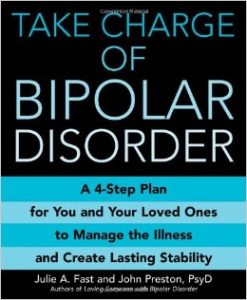
I wrote Take Charge of Bipolar Disorder for anyone interested in learning how to manage bipolar on a daily basis.  It has a specific plan that I follow in my own life. Asking a client to read a chapter a week gives a good topic of discussion for each session. 

Thank you for our work with all of us! 

Julie