Thanks to everyone for your reader comments and questions- here is one regarding work and bipolar mania.
Hi Julie,
I have been have episodes where I experience mania, wanting to buy stuff limited need to sleep and the inability to concentrate, focus finish an assigned task. This is a real problem at work as I work at a law firm and my hours are billable. I seem to have the episodes the week before and during my menstrual cycle. Do you know hormonal changes can effect my bi polar cycle/episodes? This is a real problem and I have so much anxiety because my Manager has approached me about my job performance and has sad some threatening thing to me regarding my position. I am so anxious and afraid it has a negative effect on my performance, which does not help the situation at all.
BDA Angel
Hi,
Mood swings affect work performance. That’s a fact of bipolar disorder. It’s one of the reasons I asked the poll question about whether a person with bipolar disorder would hire someone with bipolar disorder! So you are not alone. But… we can also be the greatest at work once we manage the illness because we can be more creative and self aware than most. It’s so essential that we all have a plan to manage mania when it comes to work. I know that I’m extremely creative when I’m hypomanic- but I can also be a bit over the top. I’ve learned to harness the hypomania while making sure I don’t make the mistakes I made in the past. It can be done, but it takes a lot of practice.
Menstrual cycles can be very, very influential on mood swings. I suggest that you get a mood swing chart and start charting your moods daily- then you will know your pattern and can prepare for the mania days in advance. I would also discuss meds with an experienced health care professional- bipolar disoder medications can be used at certain times of the month and then stopped when they are not needed. This takes monitoring by a HCP though. I would also be very careful if you’re taking birth control pills- they can affect your moods as well- sometimes in a good way and sometimes adversely! I know my signs of mania to the most miniscule change in mood- but it can still sneak up on me and I’ve used my treatment plan for nine years solid! It gets a lot better once you have a system.
If the mania is affecting your work- it’s essential that you start something now- I sound like a school marm here- but I can’t say enough about the importance of a plan we use every day! We need our work- but we also need to make sure the bipolar doesn’t affect our work adversely.
Why does it have to be so hard for us! The facts are that it is harder. We have to be more vigilant. But…. once we learn to manage the illness better, we can be stable in relationships and work. I’m working full time now- and that is a dream come true. You can keep your job and even work more effectively once you chart those moods and start a plan! Take Charge of Bipolar Disorder has a mood swing chart in the back- and example of how I use mine.
And one final comment- what is the first sign you have that the mania is showing up when your cycle changes? Write that down and put it in your desk- and on your fridge- you can also tell the people in your life- when you recongnize the sign- you can say to yourself,”It’s time to put my plan into effect so that I don’t let this mood swing adversely affect my work!” I was not able to work at all in the mid ninties. I now have my own business and work daily. It’s great that you are working as well!
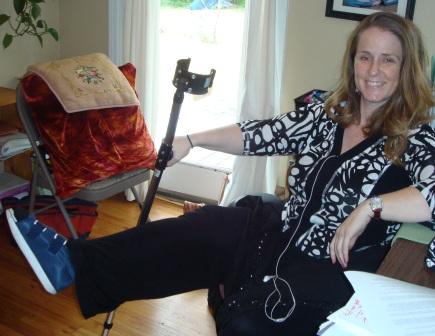
I have written something like this many times in terms of bipolar disorder depression- but this time it’s physical! I broke my toe five weeks ago and it should be healed by now. Well, guess what!
I’m amazed at how pain affects a person’s ability to work. Have you experienced something similar? I see a surgeon soon- I am also going to my acupuncturist tomorrow night.
When I feel that rise of hysteria inside my body, I think to myself. It is all going to be fine and what’s most important is that you’re very stable. That will get you through this! I have dealt with bipolar disorder mood swings since age 17. I can deal with a broken toe. That is what I say to myself!
If you search under the word toe you will see my xray!
I hope your physical health is well.
Work is going so well, I won’t let anything get me down!
Have you ever noticed how articles always refer to large companies as giants? Well, Pfizer has been hit with a giant fine for misrepresenting the benefits of three well known drugs- one of them being Geodon – an antipsychotic used to treat bipolar disorder psychosis.
Nobody plans to fail, but plenty of people fail to plan.
“Plan” is the leading self-help advice from athletes, business moguls and everyday people who have achieved extraordinary goals.
I think I’ve tried to create a plan for my day almost every day of my life for the past seven years. I’ve found it helps me function when I’m having mood swings. Of course, this is harder if you’re experiencing mania or psychosis, but it does work exceptionally well with bipolar depression, anxiety, ADHD symptoms and OCD symptoms. In fact, if it’s mild mania (hypomania) and bipolar psychosis like I get, it works then too!
If I’m having trouble getting to sleep at night- I go over my plan for the next day in my head. It’s calming. If you don’t have anything planned and it’s upsetting to you, just click on the Get it Done When You’re Depressed tab to the right. There are a lot of tips on how to create plans that work on even the toughest day.
If I know the depression is lurking, I always plan for something around three or four in the afternoon. That helps me stay focsued until then. I can have someone drop me off at work so I have to stay and follow my plan. I also write out my plan and then time the things I need to get done- this helps me see if my list is realistic. Oh yes, there are days when very little gets done, but those days happen less and less.
I started writing books in 2002- I was 38. I got a late start becuase I didn’t have enough control over bipolar disorder and I didn’t have enough help treating bipolar disorder. Getting clear on my goal of finding stability so that I could work and have stable relationships and then creating a plan for the goal has been HARD. But I keep going. It’s an everyday process. Where are you on the road to reaching goals- in fact, where are you on the road of knowing your goals? That can be a tough one as well. But I promise- as someone in 1998 who was very overweight from meds, couldn’t work and had trouble just getting out of bed, I can assure you that having a plan can make things a lot better.
I just received the following comment from Janette. I often then of the difference between mania and religious/spiritual feelings. It can be so hard to tell the difference. This is also true with the Tarot, psychic readings and anything else that connects to the spiritual world.
No matter what you believe or don’t believe, the facts are that people with mania can have what feels like a magnificent religious experience when manic and then be very devastated when they realize it was mania. Prevention is he key here. If you know your mania starts with religious/spiritual/psychic fervor, you need to know the signs and get help before they go too far. This is one situation my books talk about very, very clearly. You have to know the signs of mania a lot earlier than the signs of depression and psychosis. Mania has such a small treatment window – and you may be in a hospital thinking you’re Jesus before you know it! Here is Janetta’s letter.
Dear Julie:
I converted to Islam about 23 years ago after running around various religions and even studying them at University.
The dilemma between what is a mystical state and what is mania is truly a fascinating question. I think I’ve had both…and i would now say that a good way to discern the difference is by the effect they have on your own life and that of others.
God is always loving, just, beautiful etc etc whereas mania and craziness isn’t and can be very destructive. Depression feels like hell but if we can reach out to a higher power in that state then we can always have hope and that in itself lets a little chink of light into the darkness…
I could go on and on.
Anyways, thanks so much. I know that God is with you and the good work you do. Janetta
It’s easy to think you’re psychic when you’re actually just manic- or manic and psychotic!
Mania can make you feel you’re having a religious experience all of the time. As Janetta pointed out. The experiences that don’t cause extreme let down, harm or hospitalization are often the real thing. Mania and or psychotic induced experiences are usually episodic- in other words, the religious/spiritual intensity of feelings may simply go away when the mood swings ends- which is another way to tell the difference between what is real and what’s an illness. Julie
This is a very, very exciting opportunity for someone with bipolar disorder who wants to further their education. I have a friend with bipolar disorder who won the scholarship and used it to get his master’s degree in psychology.
I won the Eli Lilly Reintigration Comeback Award in 2007 for my work in bipolar disorder managment. It was quite an honor. I decided quite a while ago that no matter what we think of drug companies from a intellectual, social and financial level- the facts are that their drugs save lives. Thus we have to work together.
You will find all of the information needed in the link below. If you apply for this Eli Lilly Scholarship, make sure you let me know!
I am posting this one month earlier than needed so that you can do some research and see what materials you will need to put together for the application if you choose to apply. That will make it a lot less stresseful. I will post this again one the application process is open to the public.
Parent, Caregiver, Partner or Health Care Professional?
Enter your email below and sign up for Julie’s The Stable Lifestyle newsletter.
Mom Brain Podcast
Listen to Julie’s latest interview on bipolar disorder and mental health in children, teens and adults on the Mom Brain Podcast with Hilaria Baldwin and Daphne Oz.
The health information contained herein is provided for general education purposes only. This site should not be seen as a substitute for an official diagnosis or for professional health care.