I used to have an alarm on my watch (hilarious! but it was 1998!) that indicated it was time for a bipolar check in. I used this a lot when I first created my Health Cards management plan. I really didn’t know how to manage my moods very well- because I didn’t really know what moods I was having!
Monitoring my moods with an alarm really helped me learn about myself. What did MY bipolar look like? What was my mania like?
Why did I do certain things during certain mood swings? Was there a pattern? Was I in the middle of a mood swing and didn’t know it? Was it a good idea to chart my moods?
Oh yes there was! Always. By charting my moods during different times of the week for example, I learned who I am and what is bipolar disorder.
Do you chart your moods?
Here is what to look for: Suddenly feeling good with a feeling a contentment and that all is right with the world- if this comes after a depression… well, you have to be honest with yourself and admit some mania is creeping in and that you need to do something about it immediately. Trouble getting out of bed after feeling ok.
Lots of anxiety.
Spending more, talking more, eating more, traveling more. Crying more, felling more hopeless, isolating myself and just feeling awful. And just feeling great!!!!
Charting my moods is how I realized my rapid cycling was ridiculously bad. It also taught me my triggers.
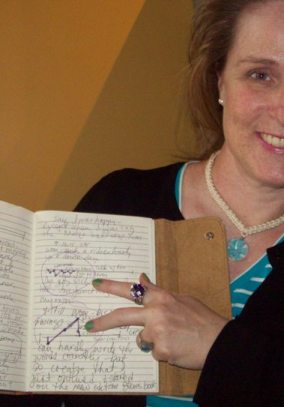
Now it’s 2011. I no longer need an alarm. I charge my moods every night in my journal. In the picture above, you can see two entries. They are across a straight line with mania on top and depression on the bottom- and yes, my rapid cycling is absolutely ridiculous.
I’ve written a column for BP Magazine since 2005. It’s a wonderful resource for those with the illness as well as ANYONE who is involved with bipolar disorder – from family members, partners and friends to health care professionals, researchers and the media.
I learn a lot from each issue especially in terms of how others deal with the illness and the latest research on medications and other treatments. I have hope when I am done reading!
Here is the link to the BP Magazine forum. It’s a place you can actually chat with people who understand! If you sign up for the forum, you will be entered into the subscription contest.
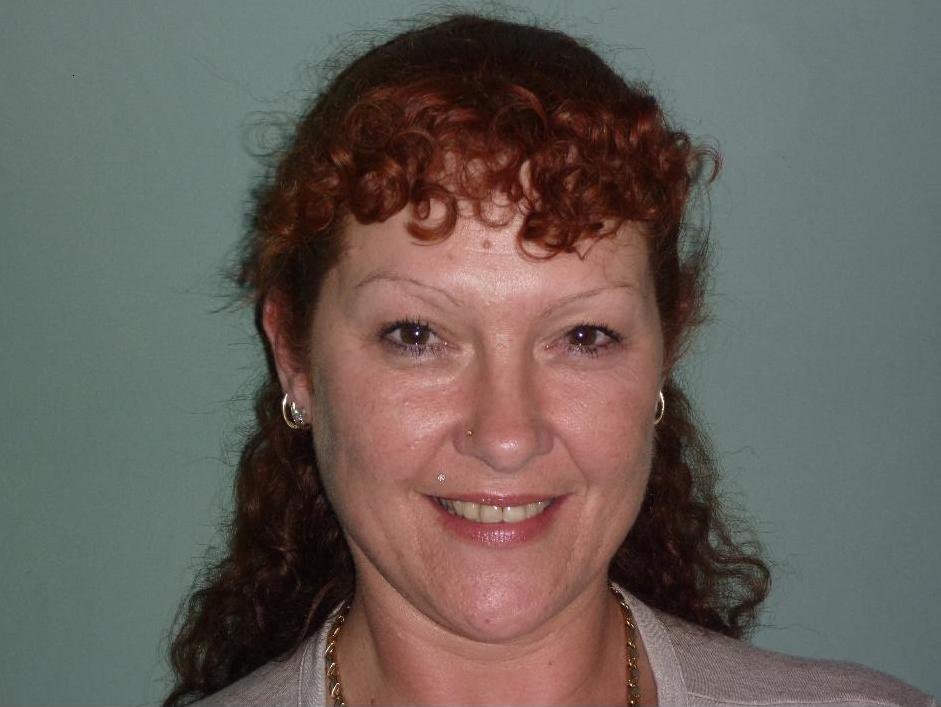
Hi, my name is Nicci Wall. I am an Aussie from Geelong, Victoria a bayside regional city. I was diagnosed with Bipolar in November 2001 after 21 years of symptoms, predominately depression.
It wasn’t until I progressed into agitated, rapid cycling mixed states that I was diagnosed. My family was scared of me, hell, I was scared of me and I hated the way I was, but didn’t know what was causing the internal rage or why. I demanded to see a psychiatrist and on doing so my Mum finally disclosed there was Manic Depression in my maternal Grandmother’s family.
It took 5 ½ years to find a medication combination that worked for me and side effects I could live with. OMG some of the side effects I experienced were worse than the illness!
When diagnosed I wasn’t provided any information on Bipolar, where to find information or where to find support, so I set about educating myself through books and an online Australian Bipolar Support Group called Fyreniyce. I learnt more from the real life experiences of other sufferers than I did from any book. I completed mood charts, identified triggers and implemented coping strategies obtained through reading, Julie’s work, support group participants and others.
I later set up a Depression & Bipolar Support Group in my local area and started compiling the living manuscript Glimpses – A compilation of uncensored real life experiences with Mental Illness and Minds Unleashed – A collection of poetry by people with a Mental Illness.
Both of which are available in pdf format for free by emailing me at (forwalls @ xi.com.au) I distribute these quarterly to Consumers, Carers, Dr’s, Clinicians, Universities and TAFE’s (it is used as a course resource), nationally and internationally. (I’ve listed my email with a few spaces in order to avoid spammers! You can type it into your email regularly wihtout the spaces. )
Now 10 years down the track I am relatively stable, but continue to have breakthrough episodes, although rarely. What I do experience regularly is a pressured head, low grade headache combined with light and sound sensitivity, which in turn affects my cognitive abilities. As I am a Bookkeeper/Admin Manager, this can be extremely frustrating and disrupt my work, but I am luckier than most as I have a boss who accepts this and allows a lot of flexibility in my hours.
I have achieved a lot over the past 10 years as a Mental Health Advocate, but the most important thing I did was take responsibility for managing my illness.
Here is a link to read more about my beaufitul home town of Geelong, Victoria in Australia.
Thanks for all of the great comments on the post below. It’s obvious that getting out of bed (and not getting on the couch) is 100% essential for people with depression. We just can’t lie there. We just can’t. Or the day will get away from us. I have a motto.
Beds are for sleeping.
And I stick to it.
Here is a great comment from Rebecca:
” I have learned that the best thing I can do for myself is to get up immediately out of bed, the minute my eyes open…if I stay in bed one more second I become depressed. This may sound so simple, but it works for me…I get up and make myself a good cup of coffee and then begin my day…I’m on disability, so I have to create my days. I try to make each day productive in some way…just going to the store is a major event in my life. Leaving the house makes me feel much better, but making the effort and just doing it is difficult. Please know that if you keep trying to make your life better it will happen…just find a routine that works for you and take those microsteps!! Good Luck…. Rebecca
** I have a tip in Get it Done When You’re Depressed called Be Your Own Drill Sargeant. It’s all about getting yourself out of bed with a burst of energy that you sometimes have to manufacture out of thin air! But it’s there. We can all get out of bed. You may have to ask for help, but you can get out of bed. I wrote about how hard it was for me yesterday. And then today I just hopped out of bed- my nephew David spent the night and I had such a great reason to get on with my day.
Here is a comment I just received from a blog reader.
Hi Julie,
Thanks for all that you do. I have to be honest- I’m not like you. I read what you write and see what you do and know it’s not possible for me. I do spend hours in bed and sometimes on the couch. I watch dumb TV and don’t make good food for myself. I’ve read Get it Done and I love it- but on some days I can’t do it. I woke up down this morning and see no point in even trying to make today different. I got on the blog and at least know that there are readers like Sandra who keep going even when things get tough. But I don’t feel I will ever be that way.
Manuel
Hi Manuel,
People often tell me that they aren’t like me. I hear it a lot. My first reaction is to say- “Wait! I am like you! I am like you! I just write books about what I go through!”
But of course I can see that I would naturally come across as different. But I’d like to tell you the truth about my days.
It’s often hard for me to get out of bed because I wake up depressed. I don’t want to stay in bed , but it’s like I’m tied down in misery. The difference these days – from the days when I was first diagnosed in 1995 is that I know there are options- really big options that luckily require really small movements. I have choices.
1. I can stay in bed and feel awful and get nothing done and cry and let my brain tell me that life has no purpose. I can listen to the radio and feel the world is passing me by. And cry some more. This means that when I do finally get up, I have a few strikes against me because I stayed in bed and I’m so upset with myself.
2. I can force myself out of bed while my brain kicks and screams and says- “What’s the point Julie!”
I can’t make that voice go away at first. But getting out of bed- a decision and motion that takes a few seconds- is the first step to at least getting my say in what I want for myday. Then there are no strikes against me to start the day. I get to make my own decisions. It’s a physical push like diving
This mini decision to get out of bed is the secret. It’s a screw you to the depression that wants me to stay there. I am like everyone else when I wake up. That’s for sure. The difference is that I’ve taught myself to manage the depression step by microstep.
You have to be willing to do things when you don’t feel good. It’s like getting used to the pain of a broken leg while it heals. If that makes sense! You have to be able to work when in great psychic pain. You have to trust that the work you do while depressed is just as good as the work you do when you’re stable.
I woke up depressed today. I have a lot to do, but it seemed pointless at 7:30 this morning. Then I said to myself, “I’ll tell you what’s pointless Julie! The truly pointless thing would be to stay in bed and let this illness take another day from you! ”
Let’s say that I’m not as different than you think, but I do have my plan and I use it. We can ALL do this. It may be hard to believe, but it’s now 9:30 and my depression is at least 50% gone. All from getting out of bed and getting on with my day. It works.
Thanks for your comment Manuel. My goal for you is that you can get out of bed each and every morning. That is a big goal, but I know it’s one you can do. The rest can follow.
Great question: My friend Marsha and I went round and round with this one. She feels that celebrities with bi-polar disorder have a responsibility to be role models. Even thought I completely see her side, I think it’s wishful thinking.
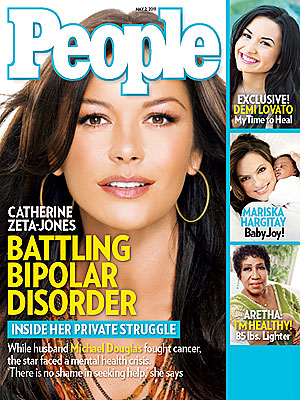
It’s true that that celebrity endorsements work much better than the stories of ‘real people’ when it comes to getting the word out about bipolar disorder. In one simple statement that she has bipolar two and is getting treatment, Catherine Zeta Jones made it ok for even more people to say they have the illness. But does this means she has to talk about it in the press each time she is in public? In fact, do you think she has a responsibility to talk about it at all?
The Price of Being a Celebtrity with Bipolar Disorder!
Interestingly, celebrity bipolar disorder disclosure comes with a big price, and it’s not stigma. Already being very productive, rich and famous erases much of the stigma anyway- especially when you can live in a PR bubble.
Instead, the price is that the whole world wants the celebrity to become an expert, advocate, guru, magazine cover draw and spokesperson!
It will be interesting to see how Catherine Zeta Jones handles this. By being honest (her psychiatric treatment was outed on the cover of the lovely National Enquirer!) and stopping the gossip directly, she has now walked into the realm of being one of ‘US.’
And people are going to want a big piece of that! I think she will just move on and say no thank you to the spokesperson role. My friend hopes she will come around and see how she can help millions of people around the world tell the truth without fear of stigma!
Parent, Caregiver, Partner or Health Care Professional?
Enter your email below and sign up for Julie’s The Stable Lifestyle newsletter.
Mom Brain Podcast
Listen to Julie’s latest interview on bipolar disorder and mental health in children, teens and adults on the Mom Brain Podcast with Hilaria Baldwin and Daphne Oz.
The health information contained herein is provided for general education purposes only. This site should not be seen as a substitute for an official diagnosis or for professional health care.