Why Do People With Bipolar Disorder Go Off Their Meds?

glenn close


My latest blog tells the story of two mothers whose daughters went off their bipolar disorder meds.

They asked me why they didn’t notice this was happening.

My latest blog for BP Magazine answers their question.

Click here to read the blog. Make sure to leave a comment if you have any questions or advice!

Julie

What Makes You Happy?

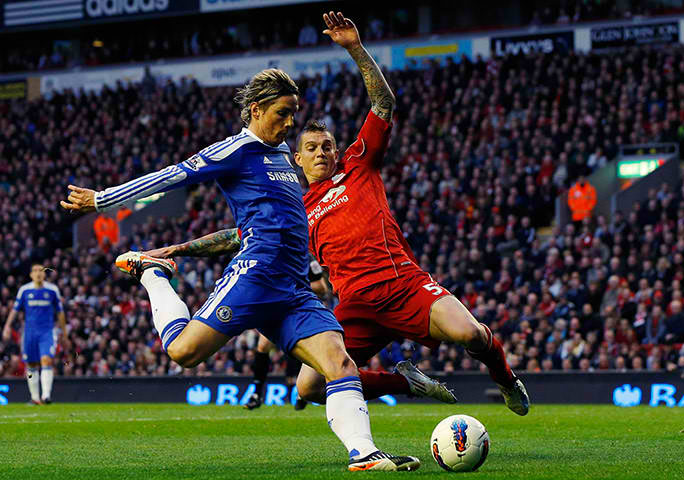
LIVERPOOL, UNITED KINGDOM - AUGUST 19:  Fernando Torres of Liverpool is pressurised by John Terry (L) , Frank Lampard and John Obi Mikel (R) of Chelsea during the Barclays Premier League match between Liverpool and Chelsea at Anfield on August 19, 2007 in Liverpool, England.  (Photo by Phil Cole/Getty Images)david halloweendavid smilingLiverpools-Daniel-Agger-c-013

Bipolar Disorder one and Bipolar Disorder two

#2 WHAT IS THE DIFFERENCE BETWEEN BIPOLAR I(ONE) AND BIPOLAR II (TWO)?
It’s often difficult to know the difference between the two main types of bipolar disorder. It can even be difficult for health care professionals to explain unless they have had special training on the topic. When you know the facts, you can see that the difference between the two is actually quite simple.

Bipolar I and Bipolar II (two)have the exact same symptoms in terms of depression and both have mania. The difference between the two diagnoses is the type of mania a person experiences. Bipolar I (one) has full blown mania while Bipolar I has hypomania.

What is the difference between full blown mania and hypomania you may wonder? The difference is intensity.

Full blown mania if untreated usually leads to a hospital stay- especially if it’s someone’s first episode. This episode usually starts around the age of 20. The mania can start off mildly with a sense of creativity and then spin out of control very quickly. When my partner Ivan had his first full blown episode it started with agitation and confusion, then moved into a complete behavioral change as he started to talk more than usual and couldn’t hold a coherent thought. The night before he went into the hospital, he wasn’t able to remember how to write a check or even have a normal conversation. He was seemingly very creative, but it was agitated and not fun and very scattered. He talked over people and moved around very rapidly. His face looked different and he talked with a different voice. He had what is called dysphoric mania- in other words he didn’t feel very well! This mania was accompanied by severe psychosis.

Euphoric mania is the opposite of dysphoric mania. When it’s full blown, it’s very dangerous as it feels so good. The person almost always refuses help when they are really euphoric. When a person has euphoric mania, they feel no pain and have no reasoning ability- and most importantly, they can’t see the consequences of their behaviors as they feel invincible. This is very, very dangerous mania as it can just seem like excessive enthusiasm, creativity and charisma from the outside.

All full blown manias lead to disasters and most people go into a deep depression if medications are not used successfully.

Hypomania

Hypomania is much less intense and doesn’t put a person into the hospital. As with full blown mania, a person can have euphoric and dysphoric hypomania. Extreme psychosis is rare with hypomania- though it’s common to have grandiose thoughts as well as negative thoughts. I get euphoric mania at the beginning of my hypomanias. Nothing feels as good as euphoric mania- absolutely nothing- but I always do something stupid and I always crash. I work very hard at preventing hypomania.

As I say in my book Take Charge of Bipolar Disorder, it’s essential that you have a distinct diagnosis of either Bipolar I or Bipolar II as the treatments for the two can be quite different! You have to know if you have full blown mania or hypomania. No matter what form you have, the mania is serious- you can make horrible and life altering decisions when you’re full blown manic or even hypomanic. Prevention is the only way to make sure this doesn’t happen.

 

Is Irritability a Sign of Bipolar Hypomania?

mania dysphoricHi, I just received this question from Sandra:

Q. Julie, is irritability a sign of hypo-mania? I’m also going from calm and patient to incredibly angry in minutes (seconds?). Any ideas? I do have an appointment to see my therapist today.

Sandra

A: Oh yes, mania can cause irritation and anger. It’s called dysphoric mania. You can also be scattered, unable to do tasks calmly and act snappy and cry in frustration. The main problem is that it affects your sleep. If you have dysphoric mania is also called mixed mania or agitated mania.

If you go from mania to depression and back, it’s called rapid cycling. I’ve lived with constant rapid cycling for years. It can be managed with a good treatment plan.

If you’re on new meds or have had a change in meds, this can cause the dysphoric mania. If you’ve recently had a stressful event in life, that can be the problem as well. Or it can just be the darn illness. Bipolar disorder mood swings don’t always have a reason – they just show up like an unwelcome guest.

So many people think that mania is always the upbeat awesome, euphoric kind. It’s not- it’s very often this upsetting, uncomfortable and very confusing dysphoric mania.

If you go to the menu on  your right, you can click on the mania tab and read more about the different kinds of mania.

Julie


My Motto: Do What You Can, When You Can, If You Can

can-do-attitudeI’m often embarrassed at how little I can get done due to bipolar disorder.  It’s so easy to be hard on myself for what I see as a PERSONAL PROBLEM. I have days where I can’t work at all.  Not even an hour. It has been like this forever, but I’m still ridiculously upset when it happens.

The reality? Bipolar disorder is often dis-abling. I may want to answer my Facebook comments or record a short blog or even clean my room, but the task it too overwhelming.   There are many days I simply can’t do what I want to do- even if it’s the most basic of tasks.

I hate it. We all hate it.

The only way out is to do what you can.  For example, I have writings from the past ten years that are a wealth of information about managing this illness.

My mind whispers: If I didn’t have bipolar disorder, I would be ABLE to go through these writings and quickly put them into books and blogs and articles and……..!!!

But I do have bipolar. 

Maybe you have bipolar or care about someone with bipolar. 

It’s a treatable illness- but it’s often a limiting illness.

I CAN’T go through all of my past writings and put the information on Facebook and record it on a podcast and do this an that.  I can do a bit at at time. That’s all.

Bummer.

Julie

Grief, Bipolar Depression and Lamictal

question 50I just received this question  from Eileen:

Julie,

It seems that I am having a very rough time managing my bipolar type 2 when my life is turned upside down and had to take a temporary leave of absence from work to take care of my Mom and spend time with her in her final stages of terminal cancer.

I am not functioning well at all.

Suggestions ? I am going to re read some of your books that I have but am not going to do everything at once. Fortunately my Mom has 24 hour paid caregivers around the clock and is receiving Hospice care.. Yet, my emotions are all over the wall and I am on a low dose of Lamotrigine at 25 mg and wondered if I should up the dose .

Thanks

Hi Eileen,

First off, 25 mg. of Lamictal is a very, very low dose. That is basically what people start at in order to slowly go up and avoid side effects. I am not a doctor- but I talk to my co author  Dr. John Preston regularly. My mother, brother, friend and myself are on Lamictal. Our doses are 125mg, 400 mg, 500 mg, and I take 700 mg.

200 mg is the basic therapeutic dose. If you go to the category list on the right, I have many posts on Lamictal and other medications.

I doubt very much that 25mg is having any effect.

You have to keep going until the Lamictal works. This is well known in the health care profession.

I think that this is the best place to start.

 I am very sorry to hear about your mother. It would affect anyone’s bipolar.

 Start with meds and go from there.  I think a grief counselor is the best next step.

 Julie