Explain Depression to the People in Your Life

GTD smallMy book Get it Done When You’re Depressed has a strategy  on how to explain depression to the people in your life.

Here is an example:

When I’m depressed I have trouble deciding what to have for breakfast, what to wear and definitely don’t look forward to my day. Work is two to three times more difficult than usual. Time goes slowly and my brain tells me how worthless and unhappy I am all day. This happens because my brain is not functioning correctly. There is nothing really wrong with ‘me’. I hope you can understand that. But there is definitely something wrong with my brain. This is why I truly appreciate your help.

I tell my family and friends what I’m going through so that they can help me every time I get sick.

Julie


Bipolar Disorder Mania and Psychosis: Are you in there Ivan?

When my former and much loved partner Ivan got sick, it happened very, very quickly.  There were small signs for weeks that we missed- but that’s understandable and no one had ever even heard of bipolar disorder in my family. 

We knew something was wrong on the day of his 21st birthday party.

He looked different- his eyes were wide and his face was very illuminated. He talked constantly and had very strong opinions on things he had never found interesting in the past. He told me how to parallel park my car and he didn’t drive!

We laughed because it was all so crazy. What was he doing? He’s a fun and interesting guy, but all of this talking and disagreeing and telling us his ‘genius’ ideas was not like him at all.  When it became bizarre, we knew something was wrong.

That was the first night of an eight month journey of hospital stays, court visits, medication side effects, relationship fears and unbelievable stress. 

When my coaching clients ask me how I understand them so well, I can always say: I have been there!

One day I was in the back yard with Ivan. It was so sunny and we were sitting by a little pond my brother had built for fish. Ivan was in between hospitalizations, but it still wasn’t him sitting there.  I was so naive.  He couldn’t really have a conversation he was so manic and psychotic. I remember looking at his face and thinking-

Where are you Ivan? Are you in there? Where have you gone? Will you ever come back?

It  makes you wonder about the essence and soul of a person if an illness can so completely take over their mind.

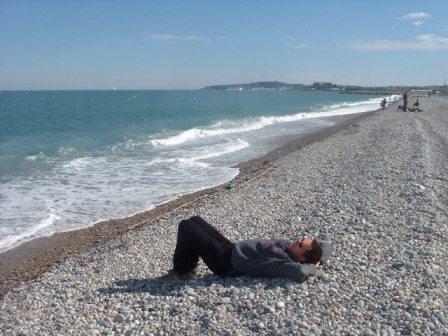
This story has a very good ending.  Ivan recovered from this episode and never had a psychotic/manic episode until 13 years later. The picture above is him on the beach in Cannes, France.

If you love someone with this illness, it can get better. It usually does. Ivan is proof!

Julie

PS: Ivan and I are still good friends. He is now living in France working in a job he loves.  He lives with bipolar disorder of course.  It’s still there.  Reality is reality!


Bipolar Disorder and Baby Steps

zebra

Bipolar Disorder and Baby Steps

A friend of mine just wrote me that she was having a hard time with her bipolar disorder and she had to remind herself that it’s all about baby steps- especially when you are first diagnosed. This is what I wrote back. When I read it I thought it might be a message that could help other as well!

Oh yes. It’s baby steps for the rest of your life- but it gets easier because the hard times have a lot of good times in between. I went a long time without a down swing and then had a bad reaction to a medication for my back. It reminded me of how much I hate depression. I then wasn’t able to get to sleep- and I was reminded of how important sleep is with this illness. The constant reminders let me see how far I have come. It will be the same for you, I promise. One day, you will go long periods of time where you are stable and life is easy and you can sleep and do your work and have a great life. It just takes planning. My favorite word! Julie 

What is Bipolar Disorder Mania?

mania dysphoricdog cartrampoline  50manicadhd 80

I Just Posted Answers to your Blog Comments

med questionAh yes! It’s always a goal to answer my blog posts- and today it happened! Check the list of the latest blog comments on the right and you will find my answers under each comment. I wish that I could answer all of my blog and social media comments. It’s not always possible, but I do read each one and am very thankful for all of the support- and am always fine if you don’t agree with my opinions. It’s the spice of life! Julie

Julie Fast on Bipolar Disorder, Pot and Spice- the name for synthetic pot…..

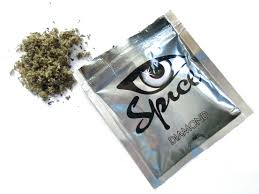
spiceNew video from the Daily Mail talks about synthetic pot in prisons. Spice…. it sounds nice, but it’s dangerous for people with bipolar disorder.

Click here to watch the video and come back to read my opinion!

All of my newsletter readers and blog readers know how I feel about what I call the
New Psychotic Pot that’s been legalized in two states so far here in
the US. Now, we have a bigger problem in
the world- synthetic pot. I spoke to a lot of younger people when I was
in California last week- (wow, when did I get old enough to call those
in their 20s ‘young people’ he hehe! )  I said this and I stick by it,
“I don’t care what people without bipolar disorder do regarding smoking
pot. Their brains are not like our brains. Bipolar brains don’t respond
well to the new, incredibly strong, hydrophonically grown and
genetically modified pot. So, if you have bipolar disorder, you need to
think about your pot use differently. It’s a choice. Now, the bigger
issue is synthetic pot- also called Spice. Here is a short news story on
the topic. It highlights the dangers of using synthetics when the real
stuff is illegal.

I’ve also included a link to a superb TIME
Magazine story on synthetic pot.  I smoked a lot of pot in the 80s and I
have bipolar disorder.  So this isn’t some soap box. I would not TOUCH
the stuff that’s out there now. I respect my bipolar brain too much to
subject it to possible drug induced psychosis! I don’t want to offer a
judgment… just information.  Tell me what you think after you watch
the video! I’m interested! Julie
Click here to read the Time Magazine Article.