The End of Bipolar Disorder Depression Isolation

img_2767


The following is an excerpt from latest blog on Bp Magazine. 

by Julie A. Fast 

I used to think that being alone was a strength. I grew up with the very 1980s and 1990s idea that we have to ‘learn to be alone in order to really be with another person.’

That might make sense if you are stable and life is going well.

For people with bipolar disorder, alone-ness and learning to be by yourself before you can really succeed can be dangerous if taken out of context.

 I have found that accepting people into my life when I am depressed is far more difficult than being alone. Depression makes me isolate. It makes me see the phone as an instrument of torture. It makes me turn to social media instead of reaching out to live human beings.

Many depression episodes are the personification of loneliness in that our brains tell us that being alone is all we deserve and that life is a lonely path we have to travel without support or love.

Does this sound familiar:

I’m depressed. I need contact, but I can’t reach out. I’m lying in my bed watching another British mystery when there are three messages from friends on my phone. I have the thought, ‘No one cares about me which is why no one is calling me.’ I am destined to be alone- lying on a bed in a dark room instead of getting out in the world. This is my life and it’s horrible.

Good heavens Julie! What is wrong with this picture?

Maybe you an spot the huge inconsistency between reality and what my brain is saying……..

Click here to read the rest of the article on the Bp Magazine website. 


Bipolar Happens! is a Bestselling Bipolar Disorder Book on the Kindle

BHenhanced 65Bipolar Happens: 35 Tips and Tricks to Manage Bipolar Disorder is often the #1 Bipolar Disorder book on the Kindle. 

That’s exciting. I went to the Kindle store to see how my books Loving Someone with Bipolar Disorder and Take Charge of Bipolar Disorder were doing on the bipolar disorder page. These books are in the top ten ranking- and then I saw that Bipolar Happens! was doing well on Amazon.

Fantastic! Bipolar Happens! is an enjoyable book about a serious topic.

Guess what- it’s only $.99              I want it to be available to everyone.

Yes, I think this is a great deal and a good way to get helpful information about bipolar disorder at minimum cost. Bipolar Happens! was my first book. I knew I wanted to talk about how I manage the illness, but I also wanted to tell stories about how it affects my life daily.

There are stories about anger, manic spending, anxiety at a baseball game and what it feels like to be psychotic! It’s a book that family members love too. I love it myself. It’s hopeful.

Click here to go to amazon.com. You can read part of the book and then add it to your Kindle. Wow, $.99!

Julie

PS: If you’re new to my work, this is a great way to experience my writing style and the quality of my information. If you like it, you can come back for more.

Interview in Slate Magazine for a Daughter who Has a Father with Bipolar Disorder

dad-moneyI was just interviewed for Slate Magazine regarding a daughter who wants to help a parent who has bipolar disorder manage an inheritance. Fascinating. I LOVED talking with columnist Helaine Olen. My interview is in the second section.

Here is the question from a reader to Helaine Olen for her

How Do You Help a Parent With a Spending Problem?

column:


Helaine,

My father recently received an inheritance. He intends to spend part of it on a house, and I assume save the rest for his retirement, which is eight to 10 years away. Here’s the issue: My dad has bipolar disorder. The condition is under control with the help of medications, but he has experienced severe manic episodes in the past that have caused him to become impulsive and reckless, financially and otherwise. He’s made big, impulsive purchases like a riding lawnmower; taken impromptu trips with no plans to return; and stolen money from his own children’s piggy banks and savings accounts after getting cut off from family finances. He’s divorced from both my mother and my stepmother, and I’m wondering what I can do to protect him and our family if he experiences another manic episode, especially now that he would have access to more money. I want to make it clear to him that I have no intention of interfering with his finances unless absolutely necessary, but I would want to limit his access to his money if he was significantly impaired or unstable, as well as have access to his accounts to make sure his bills would be paid if he could not do so himself. I would never, under any circumstances, take money out of his accounts for any other reason. I’ve brought up this topic before, and it clearly made him uncomfortable. I know he feels like people treat him differently even though he’s been stable and responsible with money in the recent past. My hope is he will be well for the remainder of his life, and I will never have to use this nuclear option. However, it’s a good possibility he will experience a manic episode again. What can I do to protect his investments and retirement?


Click here to read the answer and my interview quotes. 


Let Helaine know what you thought of her answer. I really enjoyed our interview.  She knows her stuff!


Julie


161005_bills_father-money-jpg-crop-promo-xlarge2


PS:    Thanks to Helaine for such a great interview. When I started writing books about bipolar disorder around 20 years ago, people would say, “What is bipolar disorder?” Now, we are so open about serious mental health disorders, we can talk about management in a practical way. I have the illness.  Like the woman who asked about her dad where I gave my opinion, I too have to get help from the people around me in order to stay financially stable. It’s great that we are finally talking about this in a rational way. Bipolar disorder is a genetic illness, passed through generations. It is very easy to diagnose and very, very difficult to treat. Our mania pretty much knocks out our frontal lobe functioning (Dr. Jay Carter has some great You Tube videos on this topic) and our ability to self monitor our behaviors is GONE. Her question is one that all of us affected by bipolar disorder much answer. How do we as people with the illness set up checks and balances if we get sick? How do the people around us find the courage and resources to talk with us about this tricky topic!  I talk with my clients about this regularly. Yes, it’s hard to talk to a dad this way when you are the daughter, but it’s essential. Bipolar disorder doesn’t care about anything. All of us with the illness can benefit from putting our pride to the side and asking for help. Julie Fast

Bipolar Disorder is Episodic… and that’s a positive!

kitten-vampireBipolar disorder is episodic. This means that what you are going through today will not last. I remind myself of this when the mood swings are raging. I take myself back to when I was stable and remember that episodes end.

I work on myself while I am in an episode to get back to stability. It takes the majority of my time.

My work suffers. I isolate. I cry in frustration at what this illness does to me.

But, this is so much better than not helping myself. It’s so much better to know what I am up against than to wonder what is wrong with me.

There is NOTHING wrong with me. I have a physical illness called bipolar disorder and I do what I can do get back to stability when I am sick.

Then I get on with life.

Julie

BP Magazine Article: Bipolar Depression Distortion

julie-car-head-in-hands-2015It takes a lot longer to worry about getting things done than it does to actually finish a project. This is something I’ve taught myself over the years. As I work on my new book, I have to remind myself to his daily. If I let myself, I would worry more than I would write.

Isn’t amazing how this illness can distort our thoughts to the point we don’t even know who we are anymore?

Isn’t it shocking that we can be fine one day and then suddenly the world turns to black and white and all that was once joyful turns to sand?

It blows my mind that I can be someone who doesn’t worry on one day and then wake up and the worry has taken over my life.

Yes. It is amazing. It is shocking.. This illness is pretty darn powerful. This is why I manage it with my plan. I can’t do this on my own. I need a plan for when the thoughts creep in and tell me LIES. Here is an article I wrote for Bp Magazine on the topic.

Click here to read Depression Distortion: 


Positive Changes in Our Bipolar Disorder World

shhhhh

I’m writing today to share good news about the changes I see in our mental health world. I’ve been rather despondent for years regarding the struggles we all seem to go through due to bipolar disorder. This includes those of us with the illness as well as the families, partners, friends and health care processionals who want to help us live stable and productive lives.

What is the good news?

We all know more help is needed from the outside world, especially in terms of government support and today I see it happening.  If you’re on Facebook, you know they often share old posts where you can see what you in the past. This morning, I saw a post from two years ago where I wrote:

How many more times do we have to say that our mental health system here in the United States is broken before something is done about the problem? It’s catastrophic and I don’t see any change.

We have to take charge and make change happen from our end. Julie 

Well, guess what. I see change! I see the tide turing, the sun glowing and the moon rising. I see conversations I NEVER thought possible two years ago. Here is the positive news.

pot-safety

1. Marijuana and Mental Health Disorders:  I was on the radio last week to talk about high THC marijuana and the risks it MIGHT pose for those of us with bipolar disorder, schizophrenia, depression and anxiety. There was zero backlash. The conversation was moderate and loving. The audience was receptive. We educated without shaming. We offered information without judgement. We changed the world one moment at a time. Now people who have mental health disorders can say to themselves, “If I’m smoking weed to feel better and relax, I can look for a low THC, high CBD strain so I don’t get psychotic or manic.”  This is music to my ears. Bravo!

Note: I choose not to use any form of marijuana as it makes me very ill. I tried it when I broke my back in a biking accident and though it helped my pain, it caused too many bipolar disorder symptoms that I could not tolerate. I now believe in a harm reduction, moderate approach in talking about the topic. I have learned and grown in my crusade to educate the public about high THC marijuana. 

hippa-knock-knock

2. Family and Partner Support Through HIPPA Reform:  HIPPA reform now!  Thanks to the people in politics who have experienced the devastation of trying to help a loved one who is psychotic and or manic get help in today’s society, HIPPA is finally going to change and parents, partners and other people who care will have ACCESS to a person’s medical needs.  (HIPPA is a privacy act that 100% limits access to medical information unless the person receiving the information signs a release. When a person is very manic or psychotic, they will rarely sign the release.)

Note: As a person with bipolar disorder, I’m not able to do advocacy work in public due to the symptoms it creates. I know. It’s a bummer to want to get out there and go political on everyone, but I have to stay stable. Thank you to the amazing people who can advocate for those of us who can’t. I can advocate with my words. I can let others do the walking and talking. 
gremlin-brain

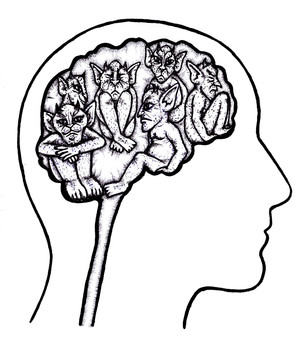
3. Mental Health and Violent Behavior:  Two days ago, on NPR- our national public radio station here in the United States, I heard a state governor say, “Until we fix our mental health system, we will not be able to deal with our gun violence.” This is the first time since I started writing about the SILENT majority problem of violent behavior in mental health that I have heard someone say this openly in relation to our shooting epidemic in the United States. Let’s stop trying to tell the world that people with serious mental health disorders such as bipolar disorder and schizophrenia are not violent. It’s not true. All of us who get manic and psychotic have the capacity for violence. Families should not have to suffer in silence. It’s nuanced. It’s not black and white.

Note: I have been shocked and appalled at the response I have received over the past five years when I talk about possible violent behavior in mental health. It’s as though I said we all have two heads. Many people reading this have been my coaching clients. You know there is violence in mental health because you live it. I know about it because my dysphoric mania makes me have violent thoughts and behaviors. We can tell the truth. 

There are so many positives here.

The above are just three ways I see our world changing in a positive direction. I’m a cock-eyed optimist who will never give up in my quest to educate the world on what those of us with bipolar disorder and other mental health disorders need.

Just two years ago I talked about all of these topics regularly and was bullied and shamed online. (This was rather stressful!)

Now, they are public news.

We are growing and changing. I feel good about this. Social media is working. We are joining hands and telling our reality of living with mental health disorders. People are listening.

Julie
small-peacock-heart