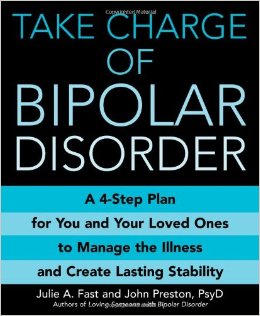
We can do anything once we know what we are up against. When I was finally diagnosed with #bipolar disorder at age 31, I had an answer to the eternal question of, ‘What is wrong with Julie!?” This gave me a platform to change. I learned about the illness and came up with a management plan. It’s in my books. I use it daily. It works for anyone affected by bipolar disorder. Parents and partners are my focus and believe me, you can learn to help someone with bipolar disorder even if the person doesn’t want to accept your help right now.
You can- we can- anyone can learn the signs of this very obvious and easy to spot illness once the signs are listed. It’s not complicate to recognize bipolar disorder once you know what to look for.
Here is one of my most popular articles from BP Magazine called Letter from a Manic Person about the not much talked about dysphoric manic episode that plagues many of us with the illness.
As you will see in the comments, the most common response is, “Oh yes! I have seen this in myself or my loved one many times and I simply didn’t know it was part of the illness!”
Let’s educate ourselves about bipolar disorder and schizoaffective disorder. We can change.
A confession. As some of you know, I had a biking accident in 2012 where I severely injured by back and hip. Rehab has been rough to say the least, but I’m doing it. What I haven’t shared much as I am still processing the information is that I also experienced a traumatic right brain injury during the crash. It’s called a TBI. I can fill a book with all of the terrible things I have experienced due to the crash, but I would rather share some of the magical experiences that were a result of my concussion….especially…..
Poetry.
I have always been a writer and I can basically rhyme anything, but poetry has never been my talent. After the injury, the poetry flowed out of me in a torrent. I had to scrabble for paper and pen to capture the events that were happening in my head. Many of the words that come up are not real words. They simply rhyme. I just leave them as they are.
I thought I was simply going through a creative renaissance as I have written so much for so many years, but this is not a regular experience and I am researching the phenomenon and learning from it.
Straight Jacket
What was it like
To be obstructed?
When your body
Deconstructed?
Your mind over bucketed?
Your being ruck sucked and destructed?
To be confined
As your mind
Lept forward
It must have been horrid
Limbs held morbid
A life truly thwarted.
I can’t see if the poetry is good or self indulgent. I can’t tell what the public will think, but I can’t stop writing.
It’s not the same thing as mania.
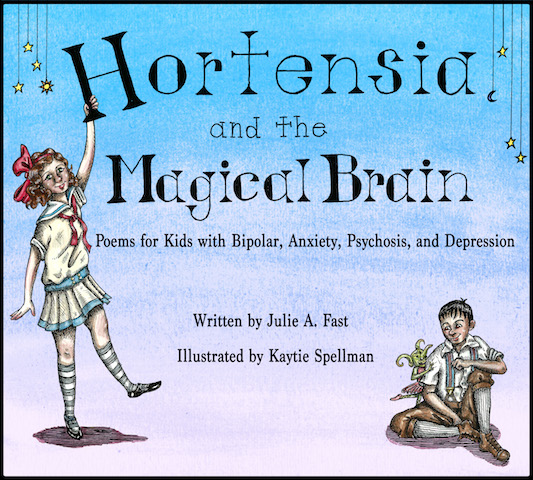
Mania is rarely fully formed for me. I am OVERLY creative. I don’t finish much of what I start when I’m manic. The poetry that will be in my next book Hortensia and the Magical Brain: Poems for Kids with Bipolar, Anxiety, Psychosis and Depression comes out fully formed. Of course it needs a bit of editing, but it’s complete. This is an amazing experience for a writer.
Trying to distinguish the difference between my bipolar disorder symptoms and this brain injury has been difficult. I have charted my moods for 20 years and this helps a lot. I am researching the role TBIs have on anxiety as my main symptom after the accident has been severe anxiety around work. My depression and mania have not increased at all.
I wanted to share this in the spirit of growth. As we learn more about our brains, we learn how to help ourselves and those we love. How many of us with bipolar disorder also experience concussions and confuse our symptoms?
I should also add the that I had 13 bilateral ECT treatments in 2010 that further complicate the issue.
I have never seen and will never see bipolar disorder as a gift. It has been destructive for me. This brain injury could have been the same, and yet it opened up a new world. Maybe people who see bipolar disorder as a gift do have positive experiences from the illness. My poetry experience has reminded me that we learn from our mishaps in many different ways.
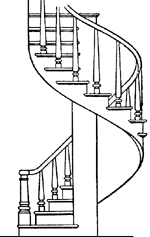
People withbipolar disorder have depression, mania, anxiety, psychosis, ADHD symptoms and restlessness. You are not alone if you have these symptoms- sometimes all at once! I call it a corkscrew illness and the garbage pail illness. We have ALL of the symptoms of most major psychiatric disorders when we are in an episode. We are STABLE when we are not in an episode. Julie
Do you have plans for the Festive Season? Do you have plans for New Year’s Eve? NOW is a great time to work out who you will see and where you will be. We are social creatures- as seen by the Santa mob below. If you have a tendency to isolate and not take care of your needs during the holidays, what can you do differently this year? If you usually get overwhelmed and burn out during the holiday seasons, what can you do to voice your absolute right to say NO to what you can’t or simply don’t want to do? My goal is for all of us to glide through the next few months with ease.
Ah. Bipolar and work ability. It often takes me two hours to get myself situated to work for one hour. This is not fun for me. But….. It means I get work done.
Before I taught myself to manage this illness, I couldn’t work. Now I can. It’s not as much as I want and it’s never when I want, but I work.
I have a career based on 25 work hours a week. That is all I can handle.
You can learn to manage this illness to the best of your ability. It won’t be the ability you see in someone else. It will be at your pace. Accepting this is the path to getting better.
It’s not fair, but I want to stay alive, healthy, stable and happy. So I have to face my bipolar facts.
Julie
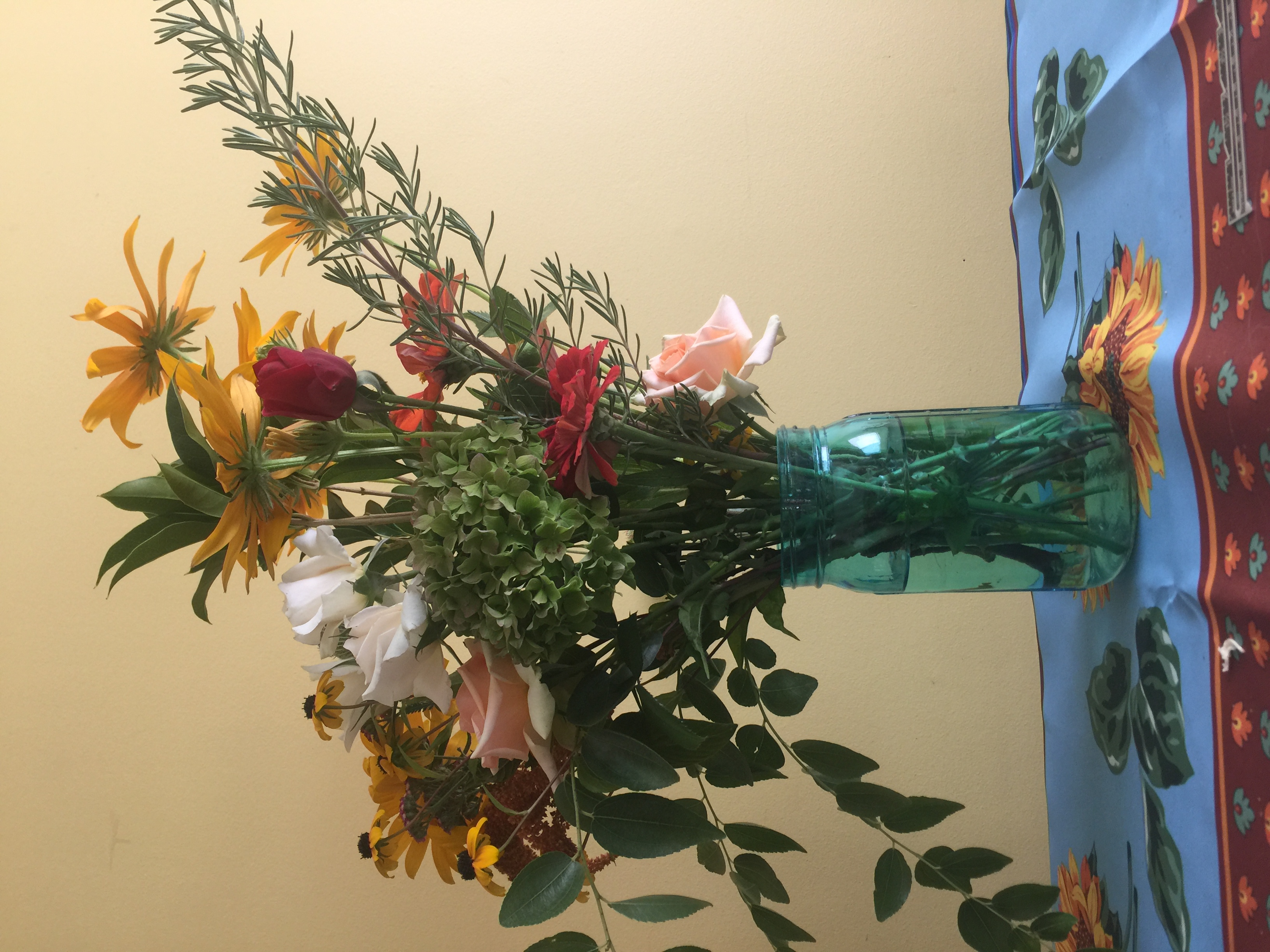
PS. I picked these flowers when I was so anxious I couldn’t breathe. When I was done I was still anxious, but I created something beautiful!
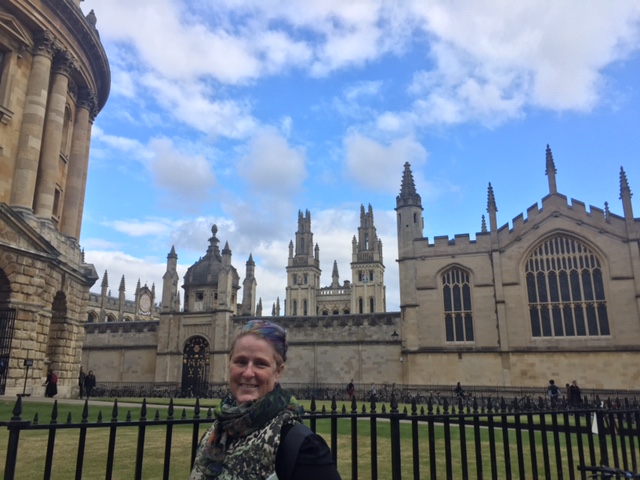
I’m speaking on a mental health panel at the Oxford Union at Oxford University in England on October 25th and could use your help. If you are a college student or know a college student in the US who has bipolar disorder, what is available at school for helping the student? I’m sure the British crowd will ask me about the US system. I know a lot about it from a parent perspective and would like to hear from someone who is actually in school. Thanks!
From the Oxford Union website.
The Student Mental Health Crisis – What Next?
25% of adults suffer from mental health conditions; this figure doubles among Oxford students. Many believe that drastic action is needed to respond to this crisis in care, engaging with both the general stigma and failing institutions.
Panellists:
Stephen K Amos – Stand-up Comedian and patron of mental health charity Time to Change
Dr Linda Papadopoulos – TV psychologist and academic
Dr Nicola Byrom – Founding chair of the charity Student Minds
Julie A. Fast – International bestselling writer on bipolar disorder and depression
Liz Fraser – Director of Headcase
***
It would be great to hear your opinion on what you feel is working and what is not working here in the States. You can find more information about this topic on my Julie A. Fast Facebook page.
Parent, Caregiver, Partner or Health Care Professional?
Enter your email below and sign up for Julie’s The Stable Lifestyle newsletter.
Mom Brain Podcast
Listen to Julie’s latest interview on bipolar disorder and mental health in children, teens and adults on the Mom Brain Podcast with Hilaria Baldwin and Daphne Oz.
The health information contained herein is provided for general education purposes only. This site should not be seen as a substitute for an official diagnosis or for professional health care.