Julie Interview in People Magazine about the Amazing Carrie Fisher


I was just interviewed by People Magazine about Carrie Fisher’s impact on our mental health world. What a wonderful woman. What a legacy she leaves behind. She will be missed. Click here to read the excellent article:

Inside Carrie Fisher’s Revolutionary Openness About Her Mental Illness: ‘She Changed the World’

Julie

Carrie Fisher and Staying Stable

What advice do you have for those who are deeply saddened by the people who have left the earth this year? I know it can be tough to have bipolar disorder and hear of so many deaths. How can we mourn someone we cared about and remain stable?

How can we say thank you for all that Carrie Fisher did for people with bipolar disorder and keep ourselves in one piece?

My advice is to set up a specific mourning time that has an end date. Rituals for the death of a loved one can be incredibly helpful. Create a collage. Write a poem. Do a beautiful, loving post about how the person changed your life. Then, and this is hard. Take care of your bipolar disorder. You matter too.

My Julie A. Fast Facebook page has more great support.

Julie


Holiday Encouragement

You are not your family. You are YOU. You are not what others say about you. You are YOU. You are not anyone’s image. You are YOU. As you go into the events that have a lot of family dynamics, remember who you are.

If being quiet works, then be quiet. If speaking out in a calm and loving way works, then speak out. But no matter what, remember that your body HOLDS you. It is not YOU. Your thoughts can sound true, but not be YOU.

Remembering who you are- what you want and what you need on a holiday is difficult, but possible.

We create our own families out of the people who treat us kindly. Being with family members who are [ Read More ]

Julie, Help! I don’t have plans for the holiday weekend!

A Christmas Cake from the amazing Alana Jones Mann

Here are some ideas: 1.Know you are not alone. I have spent many lonely holidays simply from not planning ahead. 2. Remove yourself from the idea of what this day SHOULD be like and focus on what you can make happen from this moment forward. Holidays are stressful because even though they are simply a day on the calendar, society puts enormous stress on what we should be doing on that day. Step out of this and create something of your own. 3. If there is time, plan something now. Call a person you think might be available. It you were invited to a party and said no because you were depressed, call and say you’re coming. If, [ Read More ]

Talking with Kids about Bipolar Disorder. The Julie and David Talk Bipolar Disorder Podcast

Julie A. Fast talks with her 14 year old nephew David about bipolar disorder. She started the conversations when he was four.

A note from Julie: It amazes me how easily David and I can talk about such a serious illness. I started off by educating him on my own depression, mania, anxiety and psychosis symptoms so that he could better understand my behavior. Now he is one of the greatest minds I know on the topic! He has so much insight. We can teach young people how to talk about and manage this illness. David doesn’t currently have bipolar disorder, but we have talked about the genetics of having it in the family. I hope you enjoy our discussion on how to talk about bipolar disorder in an open and [ Read More ]

Student Mental Health Panel at Oxford University

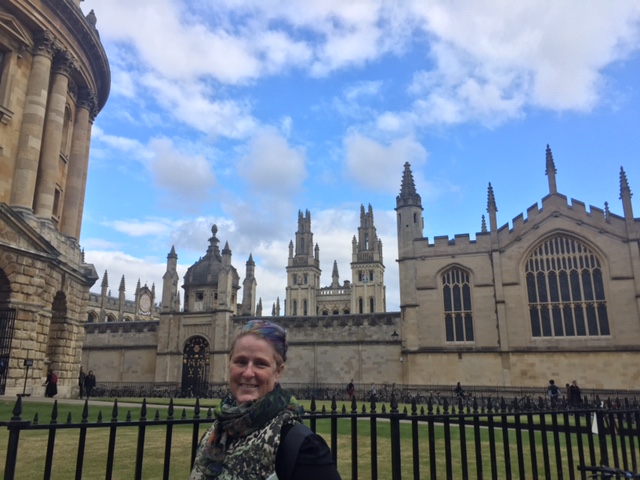
I recently spoke at Oxford University in England at the Oxford Union

The event The Student Mental Health Crisis – What Next? was a great success.

“25% of adults suffer from mental health conditions; this figure doubles among Oxford students. Many believe that drastic action is needed to respond to this crisis in care, engaging with both the general stigma and failing institutions.”

As a person who flunked out of my first college due to my untreated bipolar disorder, I’m passionately committed to helping students succeed in school. I eventually received a degree eight years after I started. It doesn’t have to be this hard. Universities, parents, students, health care professionals and teachers can band together and create a system that works for those of us who [ Read More ]